

Grow Fresh Basil All Year: The Indoor-Outdoor System That Works in Any US Zone

Stop replacing dead basil every season. This indoor-outdoor system gives you fresh basil 365 days a year — with a zone-by-zone transition calendar.
If you’ve ever watched a basil plant go limp, blacken, or bolt to seed within days of buying it, you’re not alone. Basil is the most popular culinary herb in the US, but most advice stops at “plant after last frost.” That leaves every gardener in zones 3 through 9 with a four-to-seven-month gap where fresh basil simply doesn’t exist in their kitchen.
The fix isn’t a single tougher plant. It’s two complementary setups — one indoors for winter, one outdoors for summer — with cuttings bridging the transition between them. Once the system is running, you take cuttings in fall before the first frost, root them indoors, and have a live plant producing through winter. In spring, you harden off cuttings from the indoor plant, transplant outdoors, and succession sow replacements every three weeks until the outdoor season ends. Repeat annually.
This guide walks through both setups with specific light specs, a zone-by-zone handoff calendar, downy mildew–resistant variety recommendations, and a troubleshooting table for the six most common failure points. For the full care reference — watering schedules, nutrient needs, and companion planting — see our complete basil growing guide.
Why Basil Fails — The Biology Behind the Two Main Killers
Every basil problem traces back to one of two causes: cold injury or bolting. Understanding both takes less than two minutes and prevents the repeat mistakes that make growing basil feel harder than it is.

Three pre-planned garden beds, free
Stop staring at empty beds: printable plans with exact layouts, plant lists and planting calendars — yours free from the Garden Library.
Cold injury: it starts above freezing
Basil is native to tropical India and sub-Saharan Africa, where it grows as a perennial in USDA zones 10a and 10b. It has no cold-tolerance mechanism. Research published in BMC Plant Biology explains what happens at the cellular level: basil cell membranes are rich in unsaturated fatty acids that stay fluid at warm temperatures. Below 50°F, those lipids begin transitioning from their normal liquid-crystalline state to a rigid gel phase. Once the membrane loses flexibility, it can no longer control the movement of ions and water in and out of cells. Reactive oxygen species (ROS) accumulate and trigger lipid peroxidation — the cascade that turns leaves black.
A review in Postharvest Biology and Technology confirmed that visible chilling injury begins at 54°F (12°C) and causes full leaf blackening within three days at 41°F (5°C). This is why supermarket basil often dies within a week of coming home — it was exposed to below-threshold temperatures in transit or on the shop floor before you bought it.
The practical takeaway: 50°F is the floor, not 32°F. A single cold night or a drafty windowsill can trigger injury even if the room thermostat reads 68°F.
Bolting: basil’s summer self-destruct
In summer, the opposite threat emerges. When temperatures consistently exceed 80°F and days grow long, basil redirects energy from leaf production to flowering and seed set. The plant’s signal to bolt is a combination of photoperiod (day length) and heat — both telling it that its growing season is ending and it should reproduce before dying. Leaves that remain after bolting become noticeably bitter as the plant cannibalizes flavor compounds to fuel seed development.
The solution isn’t to try to prevent bolting indefinitely — it’s to pinch flower stems the moment they appear and use succession planting so fresh plants are always ready to replace the ones that bolt. More on both below.
The Indoor Setup: Basil Through Every Winter
Your indoor setup needs to accomplish one thing: keep basil above 65°F with enough light for genuine leaf production. The container and soil are straightforward. Light is the variable that determines success or failure.
Container and soil
Use a pot with drainage holes — basil roots develop rot in standing water within days. An 8-inch diameter container is the practical sweet spot: large enough for a vigorous plant, small enough for most grow-light setups. Fill with a well-drained potting mix cut with 20% perlite, targeting a soil pH of 6.0 to 7.5. Terracotta dries more quickly, reducing overwatering risk; plastic retains moisture better if your watering schedule is irregular.

Light: why a window usually isn’t enough
A south-facing window works for indoor basil only in zones 8 through 10, where winter sun angles remain high. In zones 3 through 7, winter sun angles drop too low and day length shrinks too much to deliver the daily light integral basil needs. The result is pale, stretched, flavor-poor growth.
A full-spectrum LED grow light at 4000K color temperature, positioned 6 to 12 inches above the canopy and running 14 to 16 hours per day, is the reliable solution. Target a PAR (photosynthetically active radiation) value of 200 to 400 µmol/m²/s at canopy level. Most herb-rated LED grow lights available for under $30 deliver this range at 6 to 10 inches of distance.
One hidden problem with windowsill growing in cold climates: the glass surface temperature at night can be 10 to 15°F colder than the room. On a single-paned window, the basil leaves nearest the glass can experience chilling injury even when the indoor air reads 68°F. If you’re committed to a window setup, pull the pot 6 inches back from the glass after dark.
Watering and feeding indoors
Allow the top inch of soil to dry between waterings — under grow lights in winter that typically means every 5 to 7 days. Containers dry faster than in-ground beds, so check manually rather than following a fixed schedule. Apply a half-strength balanced liquid fertilizer every 4 to 6 weeks. In low winter light, basil’s growth slows considerably; over-feeding a slowly growing plant pushes leggy, weak stems rather than leaf production.
Keep indoor basil between 65°F and 80°F. Drafts from heating or air conditioning vents force temperature extremes that stress the plant; keep the pot away from both.
Propagating Cuttings: The Bridge That Connects Both Setups
The most efficient part of the year-round system is using cuttings to bridge the indoor and outdoor seasons in both directions. Once you have a plant — indoor or outdoor — you never need to buy seeds or transplants again.
To take a cutting:
Stop missing your zone's planting windows.
Select your US zone and month — get a complete checklist of what to plant, prune, feed, and protect right now.
→ View My Garden Calendar- Select a stem with 4 to 6 inches of healthy growth and no flower buds.
- Cut just below a leaf node with clean scissors.
- Strip all leaves except the top pair.
- Place in a glass of room-temperature water with the stem submerged 2 to 3 inches.
- Set in bright indirect light — direct sun will wilt an unrooted cutting.
- Roots appear in 7 to 14 days. Pot up when roots reach half an inch.

The spring handoff: Take cuttings from your indoor plants 3 weeks before your area’s last frost date. Root them indoors, then harden off over 7 to 10 days (start with one hour of outdoor shade per day, increasing sun exposure gradually) before transplanting outside. Your indoor plants keep producing right up to transplant day.
The fall handoff: Take cuttings from outdoor plants 4 to 6 weeks before your area’s first fall frost. Root indoors, pot up, and your new indoor supply is established well before you lose the outdoor plants to cold.
The supermarket shortcut: Most grocery store basil pots contain 6 to 12 seedlings packed tightly together. Gently separate the root clumps, root individual stems in water, and pot them up separately. A $3 supermarket pot can yield four to six free indoor plants to start the whole system.
The Outdoor Season: Maximum Flavor, Maximum Harvest
Basil grown outdoors in full sun produces significantly more flavor than indoor-grown basil. According to Iowa State Extension, indoor plants develop “less intense flavor and fragrance” compared to outdoor-grown plants — the higher UV exposure and temperature cycling outside stimulate essential oil production in the leaves. The goal for outdoor growing is to maximize your harvest window while keeping plants productive through succession planting.
Timing: soil temperature matters more than the calendar
Transplant outdoor basil only when nighttime temperatures are consistently above 50°F and soil temperatures have reached 70°F. Cold soil stalls growth even without frost — seeds germinate best at 75 to 85°F and take 10 to 14 days to sprout. Start seeds indoors 4 to 5 weeks before your last frost date to give them a head start.

Siting and spacing
Choose the sunniest location available. Six-plus hours of direct sun produces noticeably more essential oils than a partially shaded site — shade-grown basil is milder in flavor and more prone to legginess. Space plants 6 to 12 inches apart. Crowded basil limits air circulation and creates the humid microclimate that downy mildew thrives in.
Succession planting: the key to continuous outdoor harvest
Sow a new batch of seeds or root new cuttings every 3 weeks from your last frost date through early July. Each batch provides vigorous plants as the previous batch begins to bolt. By the time your first planting is sending up flower stalks and turning bitter, your second batch is at peak leaf production. Utah State University Extension recommends succession intervals of 2 to 3 weeks to maintain a continuous supply — 3 weeks is the practical interval for most home gardeners growing in small patches.
Watering and feeding outdoors
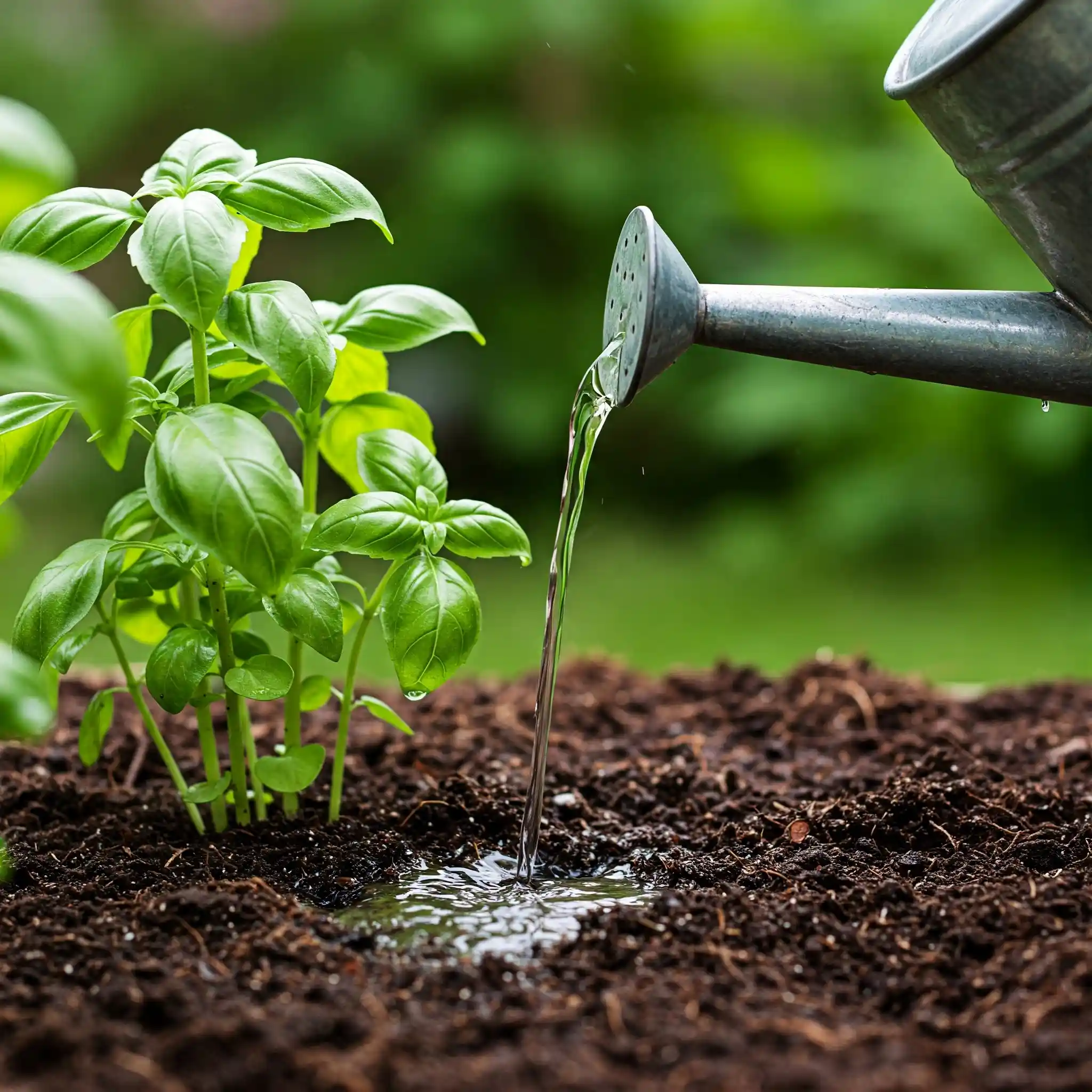
Supply 1.5 inches of water per week. Use drip irrigation or water at the base of the plant — overhead watering creates the wet-foliage conditions that downy mildew exploits. Apply a balanced fertilizer at 1 to 2 tablespoons per 10-foot row every 2 to 3 weeks once plants reach harvesting size. Container plants outdoors need feeding weekly because nutrients flush out faster with more frequent watering.
Avoid excess nitrogen. Heavy nitrogen feeding produces lush, fast-growing but flavor-poor leaves and increases susceptibility to fungal disease.
Harvesting to prevent bolting
The moment you see flower buds forming, pinch them off down to the nearest leaf pair. Don’t wait for them to open — once flowering begins, bitterness follows within days. Harvest from the top of each stem, cutting above a leaf pair, and new branches emerge within a week. For maximum flavor, Iowa State Extension recommends harvesting when flower buds have started to form but before they open — essential oil concentration peaks at this stage. For more detail on identifying and stopping bolting early, see our guide on why basil flowers.
The Zone-by-Zone Handoff Calendar
The exact timing of your indoor-to-outdoor transition depends on your USDA zone. The table below gives practical dates by zone group. “Start fall cuttings” is the date to take and root cuttings from outdoor plants — allowing 4 to 6 weeks for rooting and establishment before your first frost arrives.
| Zone Group | Last Frost (approx.) | First Frost (approx.) | Start Fall Cuttings | Resume Indoor Lights |
|---|---|---|---|---|
| Zones 3–4 (MN, ND, ME) | Late May | Late Sept – early Oct | August 20 | September 1 |
| Zones 5–6 (IL, OH, PA, NY) | Late April – early May | Mid–late October | September 15 | October 1 |
| Zones 7–8 (VA, NC, OR) | Mid March – early April | November | October 10 | October 20 |
| Zones 9–10 (FL, CA coast, TX Gulf) | January or frost-free | December or frost-free | November or skip | Minimal or none |
| Indoor-only (no outdoor space) | N/A | N/A | N/A | Keep running year-round |
Plan for a 3-to-4-week overlap period where both setups are running simultaneously. During this window, your fall cuttings are rooting indoors while your outdoor plants are still producing. Don’t shut down the outdoor patch until you’ve confirmed your indoor cuttings have established roots and are actively growing in their pots.
Choosing Your Basil Variety
With over 30 basil varieties commercially available, the practical filter is which setup you’re growing in. Most flavor profiles are achievable in both indoor and outdoor setups; what changes is disease risk.
For outdoor growing: prioritize downy mildew resistance
Basil downy mildew, caused by the water mold Peronospora belbahrii, is the most common and damaging outdoor basil disease in the US, according to University of Minnesota Extension. It shows up as pale yellow patches on the upper leaf surface with a distinctive velvety gray fuzz on the underside. Standard fungicides are ineffective against it — it’s a water mold, not a true fungus, and does not respond to typical fungicide programs. Resistant varieties are the only reliable prevention.
The three strongest performers across multiple university trials:
- Rutgers Obsession DMR: 26 inches tall, Genovese-type flavor, top-rated in NC State taste tests, strong disease resistance
- Prospera (or Prospera Active Noga): large smooth leaves, classic sweet basil flavor, excellent DMR performance
- Amazel: hybrid variety with strong DMR, vigorous growth, ornamental appearance
Red-leaf and lemon basil varieties also show greater natural tolerance to downy mildew and are worth including for culinary variety.
For indoor growing: compact size and slow bolting matter more
Indoors, disease pressure is lower, but space and light output are limited. Compact varieties that don’t outgrow a 10-inch pot are the priority.
| Variety | Setup | Size | Flavor | DMR Status |
|---|---|---|---|---|
| Rutgers Obsession DMR | Outdoor | 26 in | Classic Genovese | Strong resistance |
| Prospera / Prospera Active Noga | Outdoor | 18–24 in | Classic sweet basil | Strong resistance |
| Amazel | Outdoor | 18–22 in | Sweet, slightly spicy | Resistant |
| Spicy Globe | Indoor | 8–10 in | Compact, peppery | Tolerant |
| Dwarf Greek | Indoor | 6–8 in | Mild, sweet | Tolerant |
If you want Genovese flavor from your indoor plant, Genovese itself works well — it just needs robust light (the full 16 hours at 6 inches) to avoid becoming leggy. Spicy Globe is more forgiving of slightly lower light levels.
Troubleshooting: 6 Common Problems Diagnosed
If your basil is struggling, the table below covers the six most common failure points. For a broader range of pest and disease issues, see our basil problems and pest guide.
| Symptom | Most Likely Cause | Fix |
|---|---|---|
| Leaves turning black | Cold injury (below 54°F) | Move away from cold windows; maintain minimum 65°F; check for drafts near glass at night |
| Pale, stretched, leggy growth | Insufficient light | Lower grow light to 6 inches above canopy; extend to 16 hours/day |
| Plant flowered, leaves now bitter | Bolting (heat + long days) | Pinch flower stems back to leaf pairs; start succession plantings to replace the bolted plants |
| Yellow leaves with gray fuzz underneath | Downy mildew (Peronospora belbahrii) | Remove plant immediately; switch to Rutgers Obsession DMR or Prospera next season |
| Wilting despite moist soil | Root rot from poor drainage | Check drainage holes are clear; reduce watering frequency; repot in perlite-amended mix |
| Small leaves, slow growth despite good light | Over-fertilized or chronically under-lit | Halve fertilizer dose; verify PAR is at least 200 µmol/m²/s at canopy level |
Key Takeaways
Year-round basil comes down to three decisions made once and repeated each season:
- Run two setups. Indoor (grow lights or strong south-facing window in zones 8–10) for winter; outdoor full-sun patch for summer. Neither setup alone gives you a year-round supply.
- Use cuttings as your bridge. Take them in fall before the first frost and in spring before the last frost. The supermarket rescue method gives you free plants to start the system from scratch.
- Choose the right variety for each setup. Rutgers Obsession DMR or Prospera outdoors for disease resistance; Spicy Globe or Dwarf Greek indoors for compact, slow-bolting production.
Follow the zone calendar above for your specific transition timing, and the system largely runs itself. The only ongoing task is succession planting every 3 weeks during the outdoor season — which takes about 10 minutes of actual work per batch.
Sources
- Growing Basil in Home Gardens — University of Minnesota Extension
- Basil in the Garden — Utah State University Extension
- Spice Up Your Life: A Beginner’s Guide to Growing Basil — UF/IFAS Extension Pasco County
- Growing Basil in the Home Garden — Iowa State Extension
- Basil — UF/IFAS Gardening Solutions
- Basil Downy Mildew — University of Minnesota Extension
- Ocimum basilicum — NC State Extension Gardener Plant Toolbox
- Short-Term Metabolic Modulation of Basil After Cold or Heat Exposure — PMC
- Preharvest and Postharvest Techniques to Optimize Fresh Basil Shelf Life — PMC


