

The Sweet Secret: Do Your Plants Secretly Crave Sugar Water?

Have you ever come across a gardening “hack” that looked almost too wonderful to be true while perusing your favorite social media feed? I am certain that I have. These superbly crafted movies show someone adding a tablespoon of sugar to their watering can, guaranteeing their houseplants luxuriant, colorful growth. Isn’t that alluring? It’s really alluring to think that a basic kitchen item can be the key to developing your green thumb. It almost makes reasonable that our cherished plants would benefit from a small sweet treat as well, since we give athletes sugary drinks for a quick energy boost. This concept is discussed in comments, circulated in online forums, and occasionally even disseminated as traditional family knowledge.
However, a small voice of doubt may begin to whisper while you stand there holding your watering can in one hand and a spoon in the other. Is something so basic the solution, or is it a recipe for trouble? It’s one of the most frequent queries I hear, having spent years caring for my own indoor jungle and assisting many people with their plant issues. I’ve witnessed well-meaning plant parents try almost anything they can find online in an attempt to save a beloved plant whose leaves are dropping or turning yellow. We bring these living beings into our homes with a deep, inherent desire to care for them, and when they struggle, it can be quite painful. People want to know if they’re missing out on a miraculous remedy for their drab pothos or struggling fiddle-leaf fig.

So let’s get straight to the point and clear the air. The truthful response to the question, “What plants like sugar water?” is that sugar water is not as helpful as you may believe for your greenery, potted houseplants, and living, breathing plants. In actuality, it can lead to a wide range of issues, from drawing unwanted animals to causing a very toxic climate in the soil itself. Even with the greatest of intentions, giving a plant the incorrect care can, regrettably, result in its deterioration. I realize that this sounds totally counterintuitive.
For more on this topic, see our guide: Don’t Do It! Here’s Exactly What Happens When You Water Plants with Soda.
Seasonal Garden Calendar
Know exactly what to plant, prune and sow — every month of the year.
But wait—there’s an intriguing twist before you permanently eliminate sugar from your gardening shed. In one particular circumstance, sugar water turns into a real lifesaver and elixir of life. That lovely arrangement of freshly cut flowers on your dinner table is what I’m referring to. For them, a small amount of sugar is essential to maintaining their beauty and vibrancy for several more days.
And that is the intriguing conundrum that we will all work to solve. Why is the same substance that keeps a severed stem intact also capable of damaging the roots of a living plant? The explanation is found in the basic distinction between the functions of a plant with roots and one without. Stay with me, and we’ll examine the science underlying this widespread misconception, discover why it’s so detrimental to your potted friends, and discover how you may take advantage of it for those lovely bouquets. By the finish, you’ll have a far deeper understanding of your plants and the self-assurance to avoid this well-liked but troublesome hack.
Why Cut Flowers Succeed in a Sugar Rush: The True Winners
Let’s imagine for a moment that you have just brought home a gorgeous bouquet of roses or tulips. First, locate a vase, fill it with water, and perhaps trim the stems. What’s going on inside that stem, though? Those flowers lost their roots and leaves, which were their life-supporting system, the instant they were cut. The leaves of a living plant put in a lot of effort during the day to use photosynthesis, which uses sunlight to produce carbohydrates. These sugars serve as the plant’s nourishment and energy source, moving throughout the plant to support development and flowers.
A flower loses access to that internal food factory after it is clipped. Because it is using up stored energy, bouquets eventually wilt and fade. Here’s where we can help by using our kitchen sugar. You can provide the cut stems an external energy source that they can absorb straight through their xylem (the woody tissue that carries water) by adding a small amount of sugar to the vase water. This small action provides the flowers with the energy they require to remain open, vibrant, and fresh for a much longer period of time. It’s not so much a “hack” as it is giving a patient intravenous fluids; you’re putting vital energy straight into their system to keep them running.
But there is a catch, and a huge one at that. Bacteria are just as fond of sugar as you are! When sugar is added to water, microorganisms have the ideal environment to grow. These unwanted visitors will proliferate quickly, contaminate and odorize the water, and—above all—form a slimy biofilm that clogs the little, straw-like capillaries in the flower stalks. A congested stem will immediately wilt, negating the entire purpose, because it is incapable of absorbing water, much less your sugary solution.
For this reason, there is more than sugar in the tiny flower food packets that are included with bouquets. In order to assist the stems absorb water more effectively, they also include an acidifier (such as citric acid) to reduce the pH of the water and, most importantly, a biocide (a disinfectant) to control bacterial development. But it’s simple to design your own! Try this recipe for a quick and easy DIY flower food:
- One quart of chilled, fresh water
- One teaspoon of sugar
- One or two teaspoons of clear vinegar or lemon juice OR a few drops of household bleach (no, really!)
The sugar supplies the nourishment, the acidifier (vinegar or lemon juice) aids in the absorption of water, and the bleach serves as the cleaning crew, maintaining the water’s clarity and the stems’ ability to drink. It’s the ideal combination to ensure that your cut flowers last as long as possible on your table.
The Unspoken Risks Associated with Sweetening Your Soil
After celebrating the fact that sugar water is a plant’s best buddy, it’s time to discuss the opposite. Why is it such a bad idea for your garden and house plants? The simplest explanation is that plants in good health are excellent cooks. They produce their own sugar through the amazing process of photosynthesis, so they don’t require your assistance. Adding sugar water to their soil is unnecessary and disrupts the delicate system as a whole, much like bringing a sandwich to a five-star dinner.
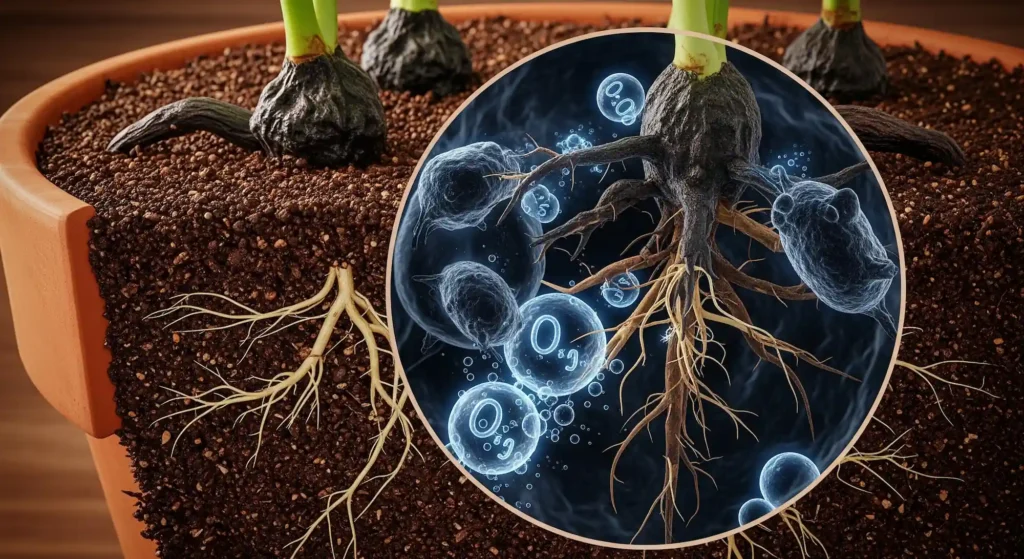
By adding sugar to the soil, you are actually feeding the innumerable microorganisms that also reside there rather than your plant. Furthermore, even while some soil bacteria are advantageous, the incorrect kind of explosion can have disastrous consequences. Hazardous, anaerobic bacteria (those that do not require oxygen to survive) and fungi feast on sugar. These microorganisms can cause root rot, one of a plant parent’s worst nightmares, by consuming oxygen in the soil as they grow. When the plant’s roots are attacked by the “bad” microorganisms, they become dark, mushy, and lifeless instead of solid, white, and healthy. The water and nutrients that the plant truly needs to survive can no longer be absorbed by damaged roots.
However, the issues don’t end there. Consider the consequences of leaving a sugary item on the kitchen counter. Pests don’t take long to appear, do they? In your plant pots, the same thing occurs. Mold, ants, and fungus gnats are all welcome in an atmosphere of damp, sugary soil. In particular, fungus gnats deposit their eggs in moist topsoil, and the sugar significantly speeds up the larvae’s feeding on fungi and decomposing organic waste. You may believe that you are rewarding your plant, but in reality, you may be inviting a serious infestation.
In the end, if you’re attempting to give your plant a “boost,” you may unintentionally produce a poisonous atmosphere that actually hinders its growth. It may even result in a type of nutrient lockout, in which the microbial activity changes the pH of the soil to such an extent that the plant is unable to use the already-existing vital minerals. I prefer to think at it this way: you wouldn’t expect a youngster to be healthy if you only gave them candy. Although it provides energy, it also contains a lot of empty calories and leads to a number of additional health issues. Instead of a blast of sugar, your plants require a balanced diet of vital elements from the soil.
What About Giving a Boost to Ailing Plants?
It’s an idea that originates from the purest of motives. Your prayer plant has ceased praying, or the leaves on your favorite monstera are drooping. It appears feeble, depressed, and in dire need of encouragement. “If it’s low on energy, maybe a little sugar will help it bounce back?” is a logical thought, and it feels like a compassionate act of providing a sick buddy with a warm bowl of soup.

Regretfully, this is one of those situations where the botanical world doesn’t fully make sense to our human logic. It would be like asking someone who has the flu to run a marathon if you gave sugar water to a sick or stressed plant. Overwatering, underwatering, lack of light, or a pest infestation are all problems that a suffering plant is already facing. Its roots are probably already under stress or have been harmed, and its systems are impaired.
You’re not giving the plant a little boost when you put sugar water in that pot; instead, you’re giving it another big issue to cope with. A swarm of hyperactive, sugar-fueled bacteria that can cause rot and illness is the last thing a weak root system wants. The plant finds it far more difficult to recover from the initial problem as a result of the accumulation of stress. It’s like attempting to hurl a brick at someone who is drowning.
So, what should you do if you notice a distressed plant? Become an investigator of plants! Take out your metaphorical magnifying glass and look at the true reason rather than going for the sugar. Take your time going over this checklist:
- Examine the dirt, not just the surface. Place your finger about two inches below the surface. Is it separating from the pot’s sides and bone dry? Or is it wet and heavy and soggy? The primary cause of the majority of plant problems is this.
- Examine the light: Tell the truth about how much light the area actually receives. Is your succulent hidden in a shadowy spot? Or are the crispy fronds of your shade-loving plant being burnt by the intense afternoon sun?
- Examine the leaves from top to bottom: Flip the leaves over and examine the stems in detail. Do you see any real insects, or white fluffy dots (mealybugs), or tiny webs (spider mites)? A plant can be rapidly drained of its life by pests.
After determining the probable issue, you can take the appropriate action to resolve it. Additionally, you should consider using a well-balanced fertilizer to assist the initial growth of your plant rather than sugar until it is stable and recovering.
So, What Should You Be Feeding Your Plants Instead?
Okay, so sugar is no longer eligible to be a member of the plant-of-the-month club. What else is on the menu, then? The good news is that there are some amazing, healthful options available to you, and that correctly feeding your plants is easy. The true “superfood” of plants is a well-balanced nutrient diet that sustains everything from robust roots to vivid leaves and stunning blossoms.
The following are some of the greatest ways to give your green friends that:
- Compost is without a doubt the garden’s greatest asset. For your soil, high-quality compost is similar to a multivitamin. It offers a slow-releasing banquet of all the vital nutrients your plants require and is brimming with organic matter and helpful microorganisms. Mix it with your potting soil at a ratio of roughly 1:3 when repotting. Once or twice a year, you can also “top dress” established plants by covering their soil with a layer of one inch.
- Worm Castings: Although it may seem strange, worm castings—or, to be honest, worm poop—are among the most amazing soil fertilizers available. They can enhance soil aeration and structure without endangering the roots and are abundant in nutrients that your plants can easily absorb. Just rub a tablespoon or two into the top inch of soil and scatter it around the base of your plants.

- Liquid Fertilizers: A balanced liquid fertilizer is an excellent option for a quicker boost, particularly in the spring and summer growing season. Consider it an energy drink with a nice taste that is also healthy. Choose one designed for indoor plants, and pay close attention to the dilution guidelines—more is not always better! During peak season, I typically advise fertilizing “weakly, weekly”—that is, a quarter-strength dose with each watering—to ensure a steady, moderate supply of food.
- Slow-Release Fertilizers: Slow-release granules are invaluable if, like me, you occasionally forget things. These are microscopic nutrient-filled spheres coated in polymers. They slowly release food each time you water them for several months after you incorporate them into the soil once. For busy plant parents, this “set it and forget it” approach to plant feeding is ideal.
It’s important to keep in mind that you’re nourishing the soil, not just the plant. Any successful plant starts with a healthy, live soil that is full of beneficial elements. By selecting any of these choices, you may provide your plants with the fine meal experience they so richly deserve.
Conclusion: The Last Word on Plant Sugar Water
What is the ultimate conclusion after our in-depth examination of the complex science of soil and sugar? It’s quite obvious. The list of plants that enjoy sugar water is surprisingly limited and narrow: flowers that have just been cut. For them, maintaining their attractive appearance in a vase is an essential source of energy. It is, however, a well-meaning but ultimately detrimental error for the rooted, living plants in your yard and house. It can cause the dreaded root rot, attract pests, and upset the delicate balance of the soil.
Moments like these—separating beneficial, scientifically supported advice from detrimental myths—are common in the process of learning how to take care of plants. Developing your curiosity and being an adept observer is more crucial for your plants than searching for a single panacea. You may give them a present that is more sweeter and more life-sustaining than sugar could ever be if you attend to their basic needs for light, water, and the right nutrition.
Frequently Asked Questions
Can I aid in the germination of my seedlings using sugar water?
What a fantastic question! It makes sense that a small amount of sugar could help seeds get going. It’s not required, though, and it might even be more detrimental than beneficial. All of the energy resources a seed needs to germinate and produce its initial leaves are already present in a flawless, self-contained packet. A fungal condition called damping-off disease, which attacks the base of the stem and can kill a seedling before it even has a chance, and mold growth can both be accelerated by adding sugar to the soil. Giving them simple water and letting nature take its course is the best course of action.
How about irrigating my veggie garden with sugar water?
Please resist the urge to give this a try! Sugar significantly disrupts the diverse and vibrant soil ecosystem that is necessary for a healthy food crop. The last things you want near the food you intend to eat are root diseases and pest issues, as well as the inappropriate kinds of bacteria it will nourish. A robust diet of compost and other organic matter will improve soil health over time, making your veggies happier, healthier, and more prolific.
How much sugar should I put in my cut flowers’ water?
Providing just enough energy without causing a bacterial feast is the aim. One teaspoon of sugar for every quart of chilled water is an excellent, dependable ratio to use. To keep the water clean and the stems absorbing effectively, don’t forget to add your bacteria-fighting agent, such as a few drops of bleach or a teaspoon or two of lemon juice. If you add too much sugar, you run the danger of encouraging more bacterial growth than your disinfectant can control.
Does it make a difference if I use brown sugar or honey?
Simple and easy to dissolve, ordinary white table sugar (sucrose) works best for cut flowers. Although honey has some antimicrobial qualities, it is a complex sugar that is more difficult for stems to digest and can quickly obscure the water. Impurities found in brown sugar and other unprocessed carbohydrates have the potential to increase the number of microorganisms. Use plain, inexpensive white sugar from your kitchen for the purpose of your flowers.
I gave my plant sugar water already. Now what should I do?
First of all, don’t freak out! With the best of intentions, it’s a common blunder. Ideally, you should take the plant to a faucet or shower and carefully pour a considerable amount of plain, lukewarm water through the soil to give it a good “flush.” For a few minutes, let the water flow freely from the drainage holes. By doing this, the extra sugar will be washed away and the soil’s equilibrium will be restored. Before you water the plant again after flushing, let it drain fully and let the soil dry out more than usual. After that, simply keep an eye on it and resume your usual, healthful care regimen.
Is it possible to substitute molasses for sugar?
Molasses is frequently hailed as a helpful addition in gardening circles, so that’s another great question. Because molasses includes minerals like calcium and iron and can nourish helpful bacteria, it can be used in extremely small, highly diluted amounts for living plants. It’s a very powerful source of sugar, though, and it’s simple to get the ratio wrong, which can result in the same issues as regular sugar: pests and poor microbiological growth. It’s a dangerous component for a beginner. It is definitely not recommended for cut flowers because it will muddy your water and encourage germs much more quickly than white sugar. It’s best to feed your plants using the tried-and-true, safer techniques.


