

Tomatoes Crave the Sun, But Are You Overdoing It? The Surprising Truth About Direct vs. Indirect Light

This one inquiry comes across in my email more often than any other as summer gets ready. Full with optimism and dreams of that first bite of a really homegrown tomato, a gardener seeks the secret. One important question still remains: where should the tomato plant really live? They have chosen the ideal kind, tenderly worked the ground, and are ready to travel. Though it seems so basic, the secret to a season of fantastic, luscious fruit or one of terrible disappointment is this question.
So let’s get right to it; I want you to get your garden plan sorted without waiting another minute. You quite definitely need direct sunlight if you want tomatoes to flourish. At their core, they are sun-worshiking plants; they will not flourish in the shadow. But this is the area that causes so many well-meaning gardeners to stumble: the idea that “more sun is always better” can actually damage your plants and provide a poor crop. It’s like a delicate recipe where a teaspoon can ruin the entire meal even if a bit of spice is ideal.
The true secret to amazing, vine-ripened tomatoes is not only about maximizing sun exposure but also about supplying the correct type of sun, at the correct moment. You might be asking, “How can sunlight be wrong?” Well, hang with me. We will explore why your tomatoes are miniature solar-powered fruit factories, how to locate the ideal “sweet spot” of sunlight in your yard, and how to identify the danger zone when a lovely bright day becomes a stressful one for your plants. Knowing just how to grow tomatoes in direct or indirect sunlight for the greatest results in your particular garden can help you go from being a gardener to a “sunshine curator.”
Appreciating the Sun’s Function: More Than Just Illumination
Let us first swiftly address the “why.” Why are your tomatoes so fixated on the sun before we discuss hours and location? The response is a small process most likely from science class: photosynthesis. For your tomato plant, it’s everything; this is the magical engine running almost all life on Earth.
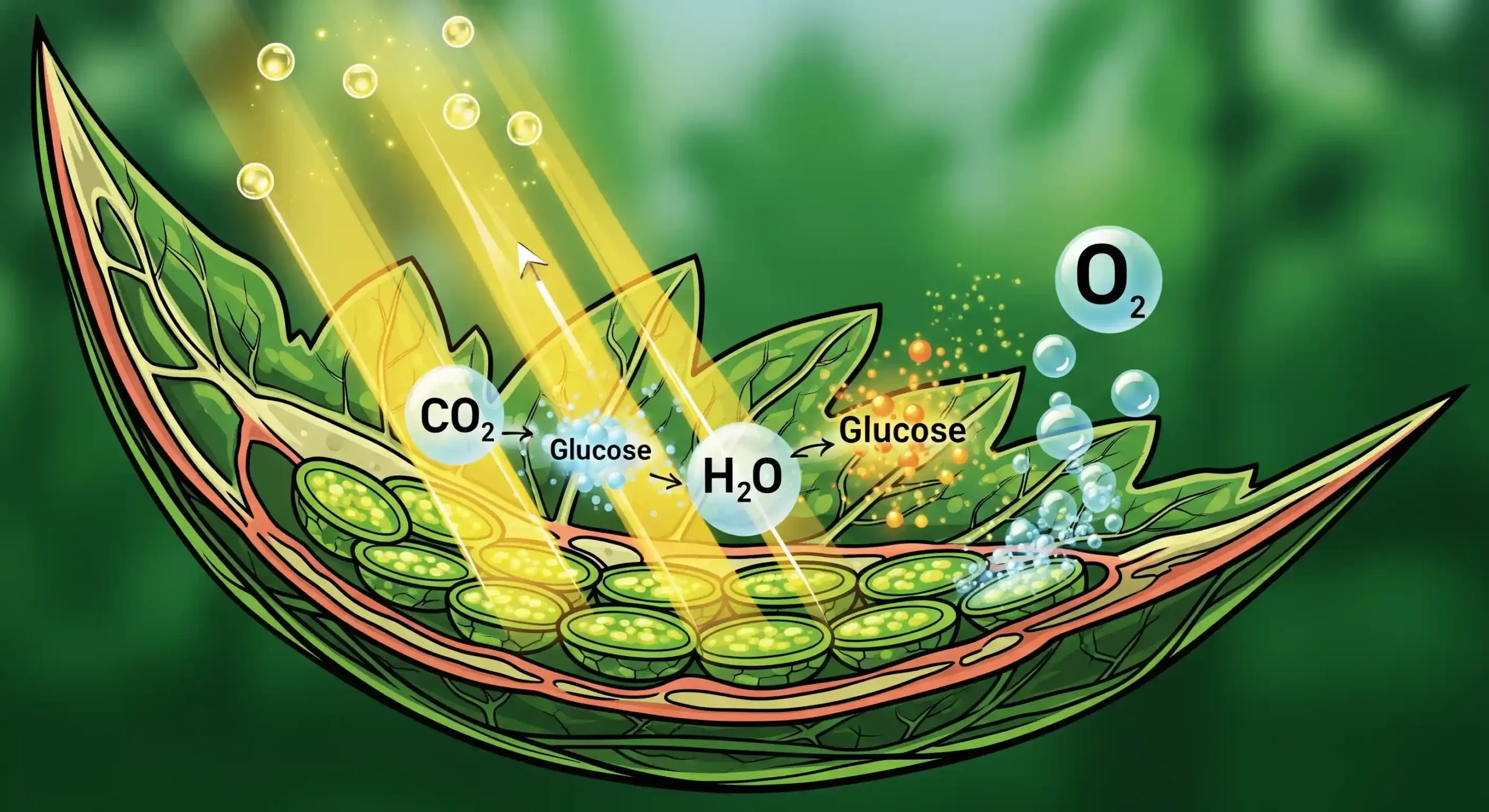
Consider the leaves of your tomato plant as thousands of very little, highly efficient solar panels. From the sun, they grab photons—particles of light energy—then use that energy to transform carbon dioxide from the air and water from the ground into glucose. This is what your plant eats. But it’s more than just food; it’s the basic building block of every single component of the plant. It’s the vitality required to create a strong stem, the gasoline to fend off a nosy aphid, and the very sweetness you taste in a perfectly ripe cherry tomato. Without enough sun, you don’t just get a smaller plant; you often get watery, bland-tasting fruit since the plant never created enough sugars to make them delectable.
Three important things this solar-powered gasoline does are:
- It drives robust, strong stems able to support heavy fruit clusters without bending or breaking.
- It increases the plant’s energy-gathering capacity by driving the expansion of rich, deep-green leaves, which function as even more solar panels.
- Above all, it drives the growth of blossoms and, finally, the mouthwatering fruit you are dreaming of. A plant poor in energy will not waste it for reproduction.
A tomato plant has excess energy when it receives adequate sun. It’s ready to create plenty for you, happy, healthy. When it doesn’t, it’s in a continual survival mode and tomatoes is the last thing on its mind.
The Sweet Spot: Revealing Tomatoes’ Perfect Light Exposure
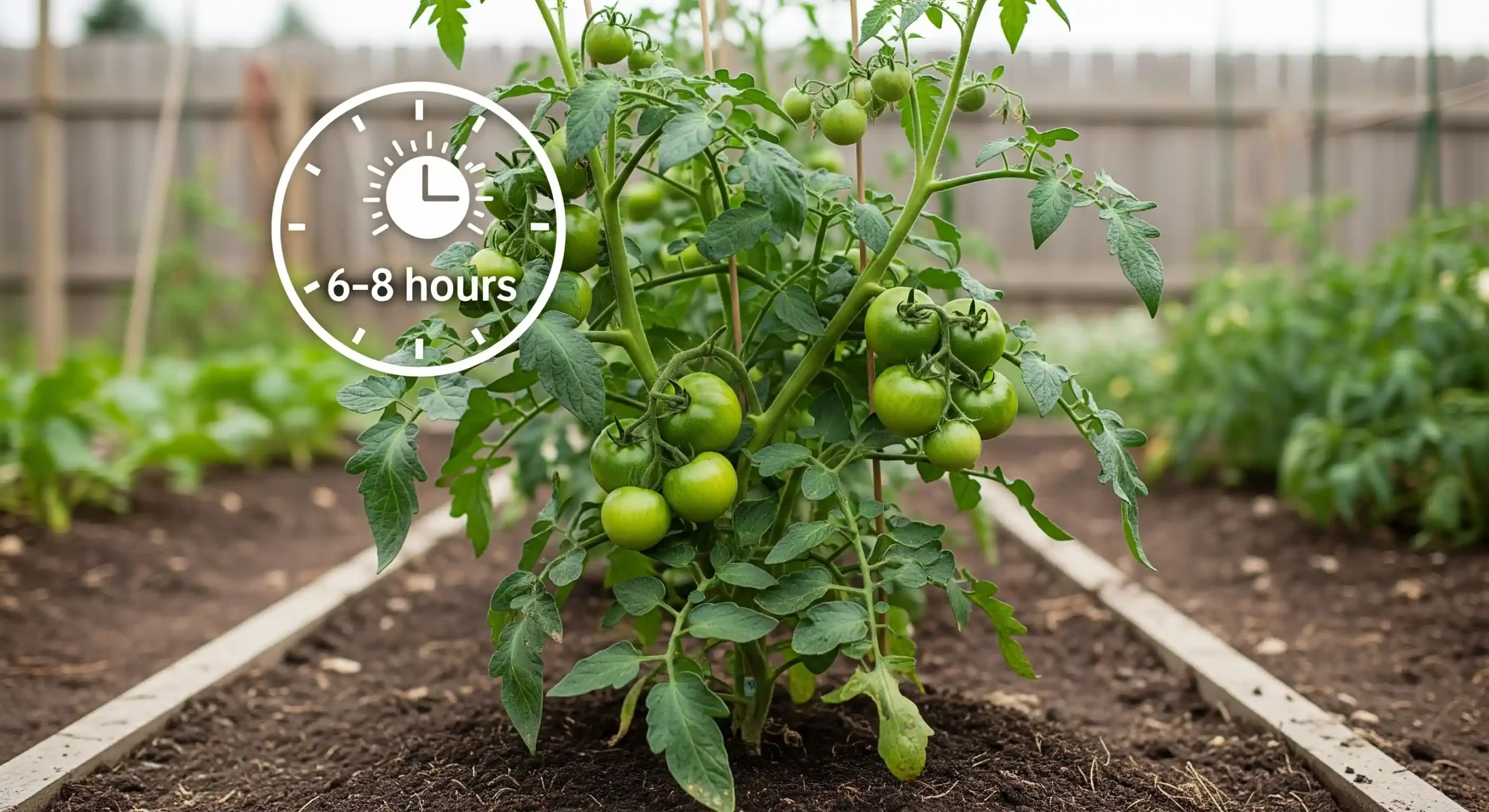
Alright, let’s address numbers and details. If there is one golden rule for tomatoes in the large universe of gardening, it is this: your plants need at least six to eight hours of direct, unhindered sunlight every day. A healthy plant is benchmarked by this.
But just what does “direct sunlight” really mean? This means that, for those six to eight hours, the sun’s rays is striking the leaves of your plant without any filtering. That sliver of light showing up between two houses for an hour in the afternoon? That has no bearing on this. Under a great oak tree, the lovely dappled light? Perfect for a picnic, but not the high intensity light we need for our tomatoes. Our search is for open heavens.
It’s amazing to see a tomato plant with just the right solar dosage. It looks… competent. It sits with assurance. The stems are stout and stocky; the leaves are a rich, vivid green and feel strong rather than floppy. Clear evidence that the plant has more than enough energy to set fruit: you will find many clusters of brilliant yellow blossoms sprouting up all around. The sweet zone when your tomato plant is living its best, turning sunshine into growth and taste, is that six to eight hour range. This is the state of affairs that will generously pay for your work.
Can a Tomato Develop Sunburn? The Peril of Too Much Sun
Now we enter the most important aspect of the discussion—that which distinguishes a good crop from a really outstanding one—that which is subtle. Can a tomato experience too much of a benefit? Absolutely. Many gardeners in warmer climates find themselves in hot hot trouble here.
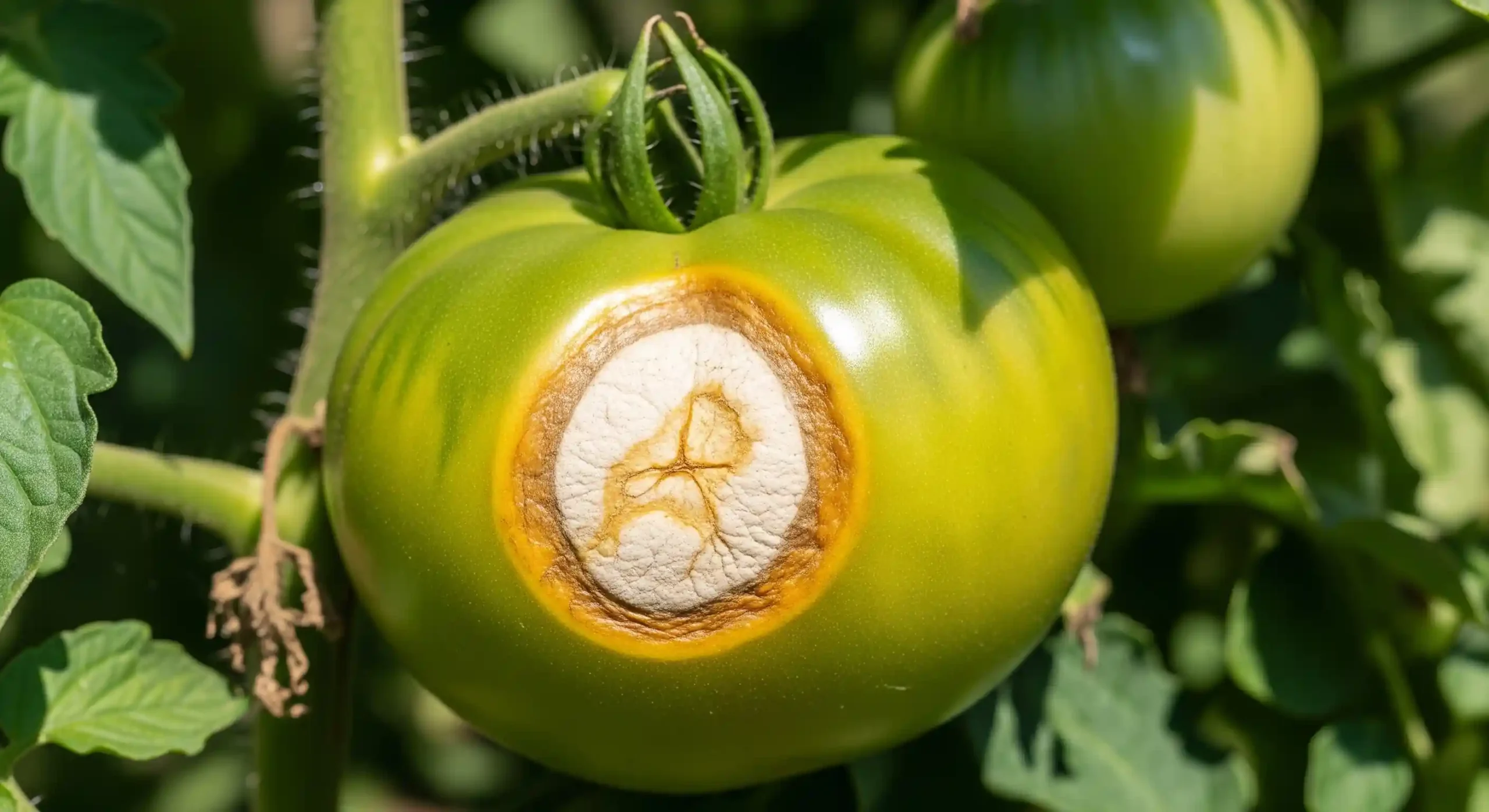
Have you ever been maintaining your garden, marveling at a tomato you have been waiting for weeks, only to discover an odd, unattractive blemish on its shoulder? It is nearly always on the side of the tomato that receives the most direct sunlight; it appears white or yellowish-gray, feels thin and leathery. Based on my experience, your first reaction most likely is that some strange illness has struck. Still, let’s pause! You did nothing illegal; your tomato just got sunburn.
Sunscald is the phenomena name for this one. It occurs when the fruit itself comes under direct, scorching sun, which raises the internal temperature of that portion of the tomato to such high levels that the cells practically die and collapse. It’s often made worse when a gardener has been a little over exuberant with trimming, eliminating the leaves that were designed to shade and protect the developing fruit. Usually edible, the damaged portion of the tomato is ruined.
For those of us that garden in really hot environments, such as the South or Desert Southwest, this is very important. That “8 hours of sun” guideline requires a small asterisk next to these areas. The strong afternoon sun from, say, 2 PM to 5 PM becomes more unpleasant than helpful as the ambient air temperature routinely climbs over 90-95°F (approximately 35°C). That sun actively bakes your plants on a 100°F day, not only supplies light for photosynthesis. This can cause not only sunscald but also blossom drop, a distressing disorder when the plant aborts its blossoms to save energy, therefore drastically reducing fruit output.
Morning sunshine is the most useful in these hotter areas. You have found tomato heaven if you can locate a place that gets blasted with sunlight from sunrise until roughly 2 PM and then gets light, dappled shadow during the warmest part of the afternoon.
Attempting to Flourish in the Shade? The Reality of Low Light
So what happens if you go in the opposite direction? Perhaps you have a yard full of lovely, mature trees or a terrace just getting ambient light. Are tomatoes still something you could raise?
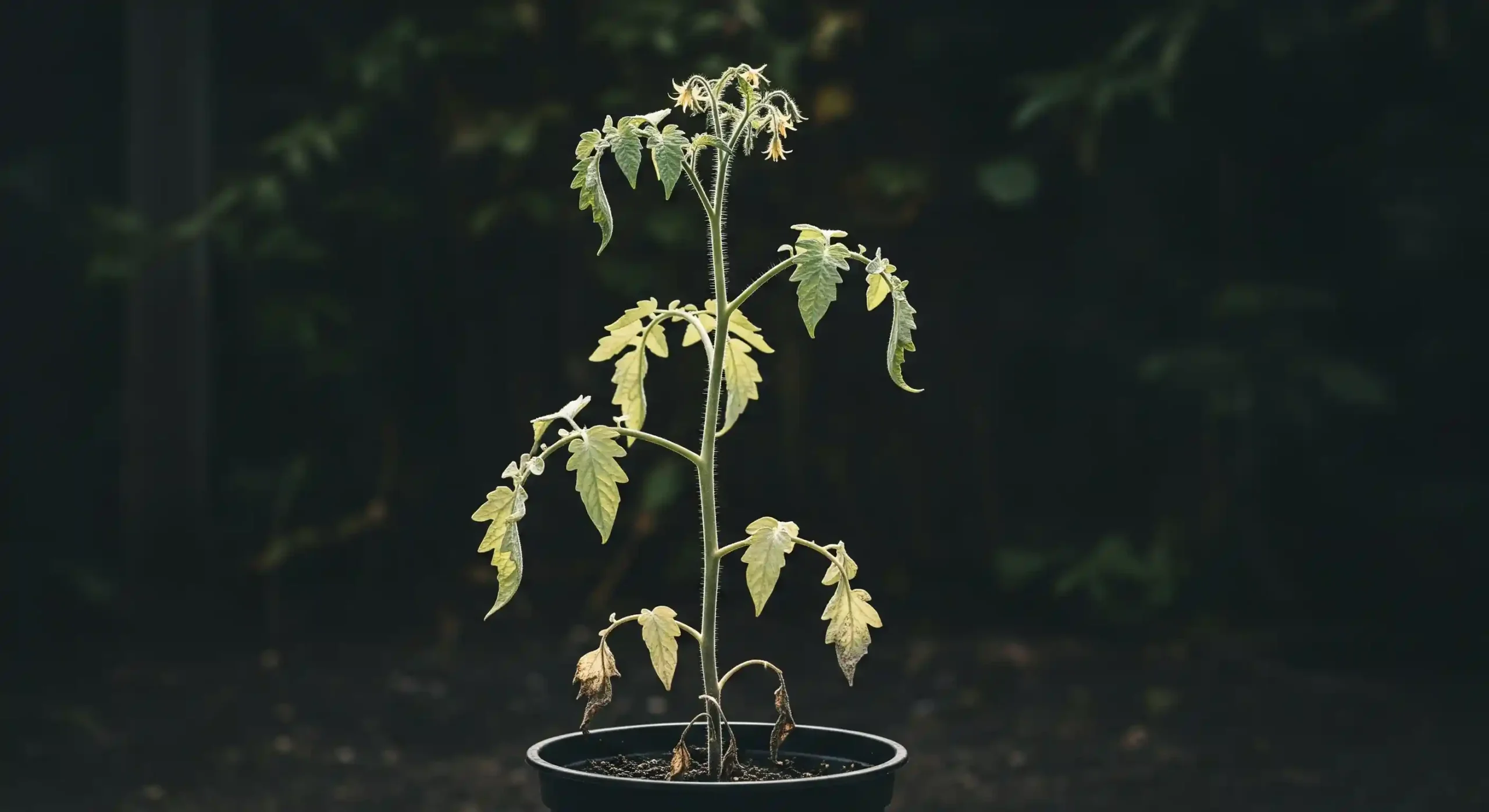
To be really honest, a tomato plant will absolutely not flourish even if it might survive in indirect light. Growing a fruiting vegetable like a tomato in the shadow is sadly a formula for frustration and, finally, failure. A plant that ought to be a strong bush seems more like a desperate vine crawling and stretching in a fruitless search for one ray of sunshine. A tomato plant short of light can show you quite visible indicators of discontent.
There will be:
- Long, “leggy stems”. The plant will look stretched out, thin, and fragile. In an attempt to break through the canopy and locate light, the plant focuses all of its energy toward taller growth in a hormonal reaction.
- Either pale green or yellowish leaves. Leaves won’t have that rich, deep green hue of a well-fed plant without enough sun for strong photosynthesis. They will seem fragile and anemic.
- Either few or none at all. A plant in survival mode doesn’t have the excess energy to spend into reproduction. Its one goal is to find light by rising taller. No blooms translates, period, into no fruit.
- Raised disease risk. Like people, a weak and stressed plant is significantly more vulnerable to fungal diseases and pests than a strong and healthy plant could readily ignore.
- Bad fruit. Taste will be a ghost of what it should be even if you overcome the odds and get a single, depressing-looking tomato to flourish in the shade. It will be watery, sour, and devoid of the nuanced sweet taste derived from a sun-drenched, sugar-packed plant.
Simply said, indirect light simply lacks the energy punch needed to support the large-scale effort of growing great tomatoes.
Your Action Plan: Becoming a Personal Sunshine Manager for Your Tomato
Empowered now? Excellent. You are not helpless victim of the way your yard is laid. You can actively control the sun’s exposure to your plant to provide just what it requires. Consider yourself as its own sunshine controller.
Learn to be a Sun Mapper
Before starting any kind of planting, this is the one best thing you can do. At 9 AM, noon, and 4 PM take out your phone. Photograph your prospective garden location from the same vantage point. Ultimately, you will have a flawless visual record of sun movement throughout your yard. This five-minute chore can save you a whole season’s worth of letdown.
Prune for Light (Wisely)
Prune off the lower leaves and “suckers,” the little shoots that emerge where a branch meets the main stem, as your tomato plant grows. This not only enhances airflow—which aids in disease prevention—but also opens the plant, therefore enabling more sunlight and air to reach the inner sections including the ripening fruit. Still, this is a delicate dance. Not forget our lesson on sunscald. The intention is to let the fruit be mottled with light, not to have a direct, strong spotlight. Leave enough leaves to act as a naturally occurring parasol for the fruit below.
Rejoice, Container Gardeners
If you are growing in pots, your main benefit is mobility. Before you ever fill them with soil, I strongly advise putting heavy pots on wheeled plant caddies. This lets you follow the sun physically. On a lovely 80°F day, wheel your pots to the sunniest spot. Should a severe heatwave be expected, you can quickly relocate them to an area with some afternoon shade. Additionally take pot color into account; lighter-colored pots—such as terracotta or cloth grow bags—stay cooler than black plastic pots, which can roast the roots of your plant.
Use Shade Cloth (If You Must)
Your best friend is a basic 30% shade cloth if you live in an extremely hot climate and your best sunny place is exposed all day. It is especially made to cut just enough of the sun’s intensity to avoid sunscald and heat stress, without significantly lowering the light required for photosynthesis. You can readily find it at garden centers and attach it to stakes or your tomato cages during the hottest afternoon hours.
Frequently Asked Questions
Can my tomatoes benefit from grow lights?
Indeed, totally! Actually, if you are beginning your tomato seeds indoors in late winter or early spring, grow lights are almost indispensable. Effective light must be a full-spectrum (white) light kept just 2–3 inches above the heads of the seedlings. This bright, direct light helps them to become stocky rather than weak and lanky. Still, growing a full-sized, fruiting tomato plant totally under lights presents another difficulty. To recreate the energy of the sun, it is feasible but very strong (and usually costly) lights are needed. For most home gardeners, grow lights are for obtaining a head start, not for the full season.
My balcony gets four hours of direct sunlight. Can I still grow tomatoes?
I refer to this as a “gardening experiment,” and I always advocate experimenting! Though you can surely attempt, you are not likely to get a large, plentiful crop. Your best choice is to select a smaller, “determinate” variety that stays more compact, like a “Patio” tomato, or small cherry tomato varieties like “Tiny Tim” or “Red Robin.” These kinds have a somewhat higher chance of succeeding with less sun since they are engineered to produce their yield all at once on a smaller plant. Control your expectations and help keep moisture by using the largest container you can fit. That’s always a win—you might just get a couple very good, homegrown tomatoes.
What are the first signs my tomatoes are not getting enough sun?
Your plant will communicate really rapidly. The very first indicator is usually the one we described earlier: the plant will start to look “leggy.” The area on the main stem between each set of leaves (the internodes) will seem particularly long. The plant will seem stretched, spindly overall. Not too long after that, the leaves will seem to be a pale, almost lime green rather than a rich, deep green. These are your plant’s earliest calls for aid, warning you it needs more light, and it needs it now.
Do my tomatoes still need sun once the fruit starts to change color?
This is a really interesting question that captures the core of tomato ripening. The color change itself (from green to red, for example) is a process that can happen even if you pluck the tomato and bring it indoors. The taste, though, tells another tale. The solar panels on the plant create the sugars from their leaves. Then, when the fruit ripens, that sugar is injected within it. Thus, keep the tomato plant in the sun so it can keep generating those sugars right up until the moment you harvest for the sweetest, most flavorful tomato.
For a full reference on growing tomatoes — variety selection, watering, fertilising, pruning, common diseases, and harvesting — see the complete tomato growing guide.
So, What’s the Verdict?
Direct sun is absolutely non-negotiable for a healthy, productive plant, hence in the end the friendly argument over whether to grow tomatoes in direct or indirect sunlight has a very clear winner. From the robust stems to the last, mouthwatering fruit, it is the gasoline running the whole operation.
As we have seen, though, becoming a really outstanding gardener is not about mindlessly applying one rule. It’s about seeing and meeting your plants’ needs. It’s about realizing that on a sweltering day the same sun that provides life may also induce tension. It’s about recognizing the particular dance of light and shade in your garden and arranging your plants where they will be most happy. See yourself as a sunshine curator for your plants rather than as a gardener.
So grab this understanding and stroll into your garden. Approach it from fresh angles. Now you search for the ideal habitat for your plants, not only for a patch of dirt. You know just what I mean. Go out there now and cultivate the finest—and smartest—tomatoes of your life.


