

7 Lilac Varieties That Actually Thrive in Zones 8-9 — And the Tricks That Make Them Work

Most lilacs fail in zones 8-9 because they need 800+ chill hours. These 7 low-chill varieties actually bloom—plus the exact tricks warm-climate growers use.
Why Most Lilacs Die (Or Just Refuse to Bloom) in Zones 8 and 9
The story is painfully familiar in zone 8-9 gardens: you plant a beautiful lilac in October, it leafs out in spring, it grows for two or three years—and it never blooms. Not once. The shrub is perfectly healthy. It just won’t flower.
This isn’t a soil problem or a pruning mistake. It’s a chill hour problem, and understanding it is the key to growing lilacs successfully in warm climates.
Common lilac (Syringa vulgaris) needs somewhere north of 800 hours of temperatures between 32°F and 45°F each winter before it will set flower buds. According to University of Minnesota Extension research on dormancy physiology, this cold exposure triggers a shift in plant hormones—specifically abscisic acid and gibberellins—that moves the plant out of dormancy in a controlled, coordinated way. Without that hormonal reset, buds either don’t develop or break unevenly, producing a few weak clusters at best and nothing at all at worst.
Zone 8a gardens typically accumulate roughly 500–700 chill hours in an average winter—right at the margin for common lilacs, achievable only in the coldest years. Zone 8b drops that to 300–500 hours. Zone 9 gardens rarely exceed 150–300 hours, and in mild years even less. For standard S. vulgaris cultivars, that’s simply not enough.

Three pre-planned garden beds, free
Stop staring at empty beds: printable plans with exact layouts, plant lists and planting calendars — yours free from the Garden Library.
Breeders have spent decades selecting lilac species and hybrids that bloom with far fewer chill hours, and a handful of those selections genuinely deliver in zones 8 and 9. The seven varieties below are the ones that actually deliver fragrant flowers in zones 8 and 9—not just survive, but genuinely bloom. After each variety, you’ll find the growing specifics that matter most in warm climates.
7 Lilac Varieties for Zones 8-9: At a Glance
| Variety | Zones | Height | Bloom Color | Chill Need | Best For |
|---|---|---|---|---|---|
| Lavender Lady | 8–9 | 8–12 ft | Lavender | Very low | Zone 9, classic fragrance |
| Angel White | 8–9 | 8–10 ft | White | Very low | Zone 9, white gardens |
| California Rose | 8–9 | 8–10 ft | Medium pink | Very low | Zone 9, pink color |
| Blue Skies | 8–9 | 8 ft | Lavender-blue | Very low | No dormancy trick needed |
| Miss Kim | 3–8b | 4–9 ft | Pale lavender-pink | Low-moderate | Zone 8, compact gardens |
| Excel | 3–8 | 10–12 ft | Light lavender | Low | Zone 8, early bloom |
| Bloomerang Dark Purple | 3–7b (8a marginal) | 4–5 ft | Purple | Moderate | Zone 8a only with cold winters |
The Descanso Hybrids: Bred for Your Climate
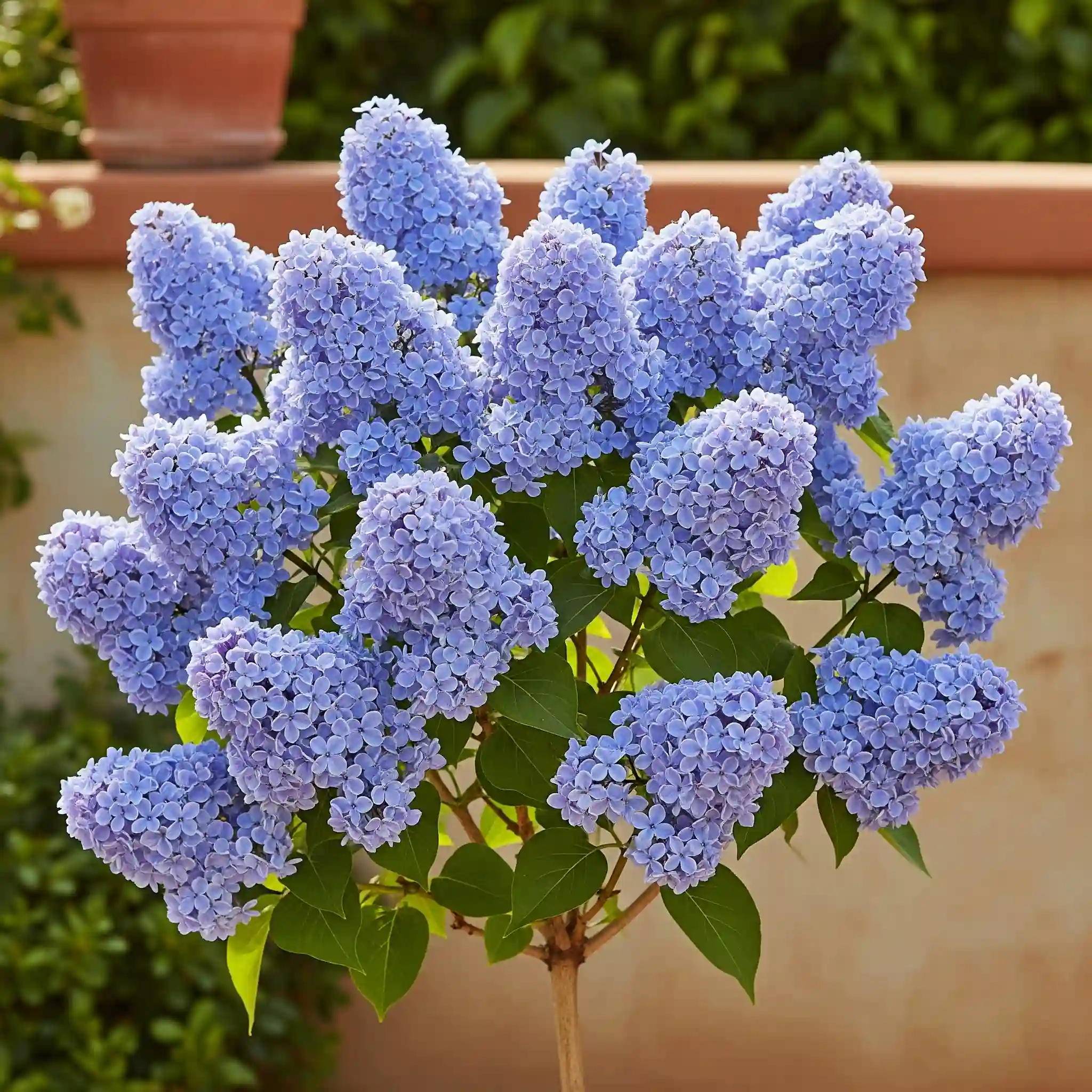
The most reliable lilacs for zones 8 and 9 don’t come from the lilac-heartland breeding programs of upstate New York or eastern Canada. They come from Southern California.
Starting in the 1940s, horticulturist Walter Lammerts set out to solve the warm-climate lilac problem by crossing Syringa vulgaris selections with other species known for lower chill requirements. Working at Rancho del Descanso, he produced ‘Lavender Lady’—the world’s first reliably low-chill lilac cultivar—which debuted in nurseries in 1954. Subsequent breeding at Descanso Gardens produced ‘Angel White’, ‘California Rose’, and ‘F. K. Smith’. Later, rose hybridizer Ralph Moore added ‘Blue Skies’ to the group.
These Descanso hybrids share one defining trait: they’ll bloom even after winters mild enough that a Syringa vulgaris wouldn’t produce a single flower cluster. Zone 9 gardeners in California’s Central Valley, coastal Texas, and the low deserts of Arizona report consistent spring blooms with these varieties.
Lavender Lady
‘Lavender Lady’ grows 8–12 feet tall and equally wide over time, with the classic lilac form—upright stems, heart-shaped leaves, and dense conical flower clusters in soft lavender-purple. Fragrance is strong and true to the classic lilac scent most gardeners expect. This is the variety to choose if you want the closest thing to a northern lilac experience in zone 9.
Angel White
‘Angel White’ covers the white end of the Descanso range with creamy white clusters on a plant similar in size to ‘Lavender Lady’. Selected from Lammerts’ original seedlings by Monrovia Nursery, it’s considered slightly less vigorous than the other Descanso cultivars but produces a particularly clean, elegant flower display against dark foliage.
California Rose
‘California Rose’ blooms a warm medium pink—closer to the pink of Syringa ‘Sensation’ than to the mauve-purple of most lilacs. At 8–10 feet, it’s one of the more vigorous Descanso cultivars and considered an abundant bloomer even in zone 9b.
Blue Skies: The One That Doesn’t Need the Dormancy Trick
‘Blue Skies’ stands apart from the other Descanso hybrids in one specific way: it reportedly doesn’t need the late-summer water withholding that most low-chill lilacs require to enter dormancy properly. According to Sunset Magazine’s original Descanso hybrid coverage, the other cultivars benefit from having irrigation cut off in September to simulate the seasonal dry period of a cold-climate autumn, but ‘Blue Skies’ blooms reliably without this intervention.
In practice, that makes ‘Blue Skies’ more forgiving for gardeners who don’t want to manage a deliberate drought cycle for their lilac. It grows to about 8 feet and blooms in lavender-blue with exceptionally strong fragrance—considered by many zone 9 growers to be the heaviest bloomer in the Descanso group.
Miss Kim: The Most Reliable Choice for Zone 8
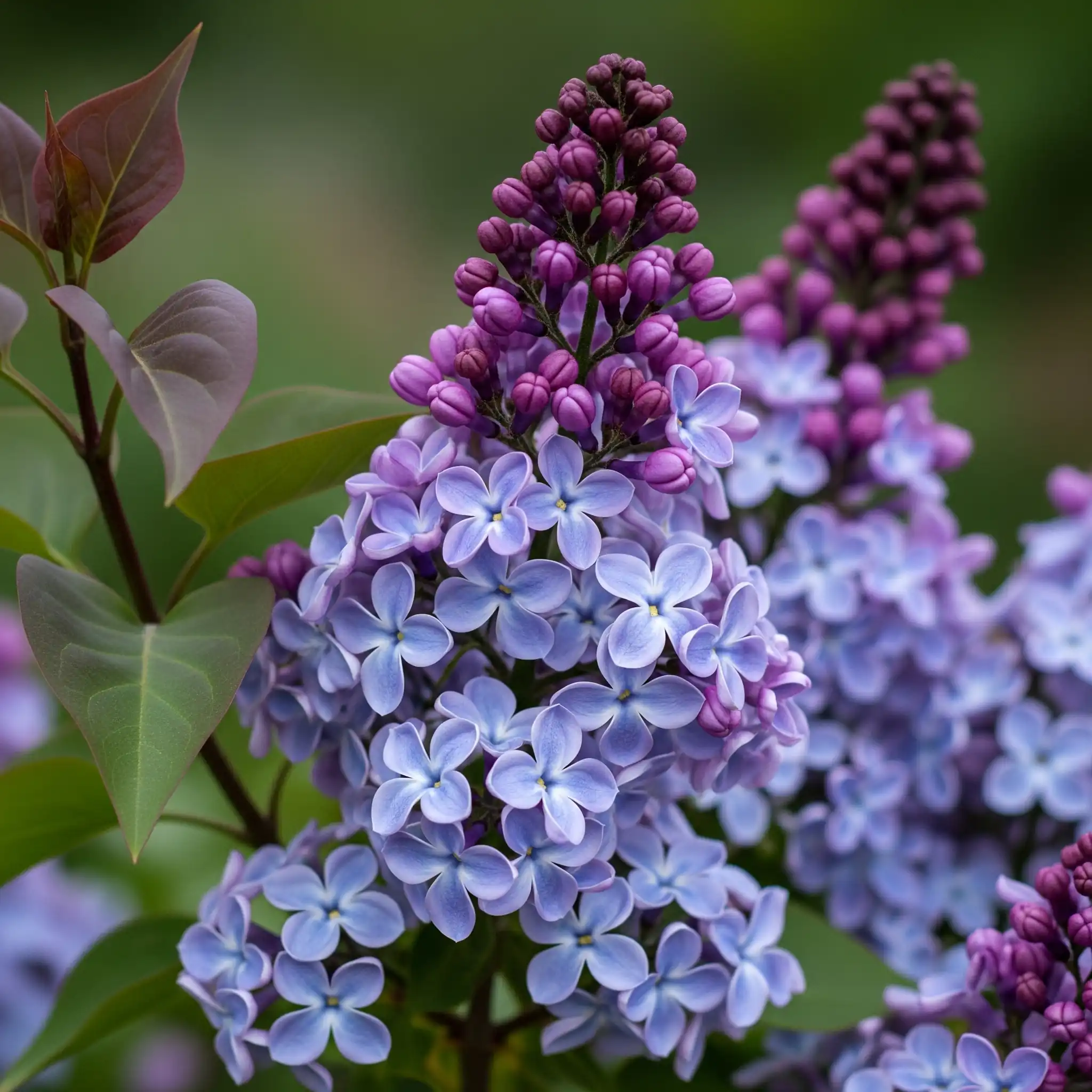
If you’re in zone 8—particularly 8a or 8b in the upper South, the Texas Hill Country, or the Pacific Northwest east of the Cascades—Miss Kim is likely your single best option.
Miss Kim is not a Syringa vulgaris selection. It belongs to a different species entirely: Syringa pubescens subsp. patula, native to Korea. This species difference matters. Korean lilacs evolved in a climate with shorter, less extreme winters than the lilac heartland of central Asia, which means their chill hour requirements are naturally lower. Miss Kim specifically—according to the dedicated Miss Kim care guide—is rated hardy to zone 8b by NC State Extension, which makes it the only widely available lilac species that carries a formal recommendation from a university extension service for zone 8.
The practical differences from Descanso hybrids are worth knowing:
- Size: Miss Kim reaches 4–9 feet tall and 5–7 feet wide—considerably smaller than the 8–12 foot Descanso shrubs. That makes it useful in foundation plantings, mixed borders, and smaller suburban gardens where a 10-foot lilac would be out of scale.
- Bloom time: Late spring to early summer, which actually helps in zone 8. The later bloom reduces the chance of late frost damage on opened flowers.
- Disease resistance: Exceptional powdery mildew resistance—something S. vulgaris cultivars often struggle with in the humid summers of zones 8 and 9.
- Fall color: An underappreciated bonus—Miss Kim’s foliage turns burgundy-red in autumn, extending ornamental interest beyond the spring bloom window.
Miss Kim received the Royal Horticultural Society’s Award of Garden Merit, which evaluates plants for performance, reliability, and availability. It’s carried by most large-format garden centers and many online nurseries, making it easy to source.
One caveat for zone 9: Miss Kim is rated to zone 8b, not zone 9. In zone 9 gardens with particularly mild winters, even Miss Kim may fail to bloom consistently. In that case, the full lilac growing guide covers the Descanso hybrids as the primary zone 9 recommendation.
Stop missing your zone's planting windows.
Select your US zone and month — get a complete checklist of what to plant, prune, feed, and protect right now.
→ View My Garden CalendarExcel: The Early Bloomer Worth Knowing
‘Excel’ is a Syringa × hyacinthiflora cultivar—a hybrid group that crosses common lilac with S. oblata, an early-flowering Asian species. The oblata parent contributes one key advantage: it blooms 7–10 days earlier than S. vulgaris and requires less cold to trigger flowering.
NC State Extension’s plant database specifically identifies ‘Excel’ as having a low enough chill requirement to perform well in warmer zones, placing it alongside ‘Lavender Lady’ and ‘California Rose’ on that list. In zone 8, that translates to more consistent blooming in years when winter chill is marginal—it simply needs less cold to do its job.
‘Excel’ is a large shrub, reaching 10–12 feet tall, and its flowers are light lavender with good fragrance. The earlier bloom time (late February to mid-March in zone 8) means it’s often finishing before the worst spring heat arrives, which reduces heat stress on open flowers.
The trade-off: because it blooms so early, late frosts pose a risk. In zone 8 areas with occasional late cold snaps—parts of Oklahoma, the Texas Panhandle, northern Georgia—site ‘Excel’ in a protected spot that avoids the lowest frost pockets.
What About Bloomerang?
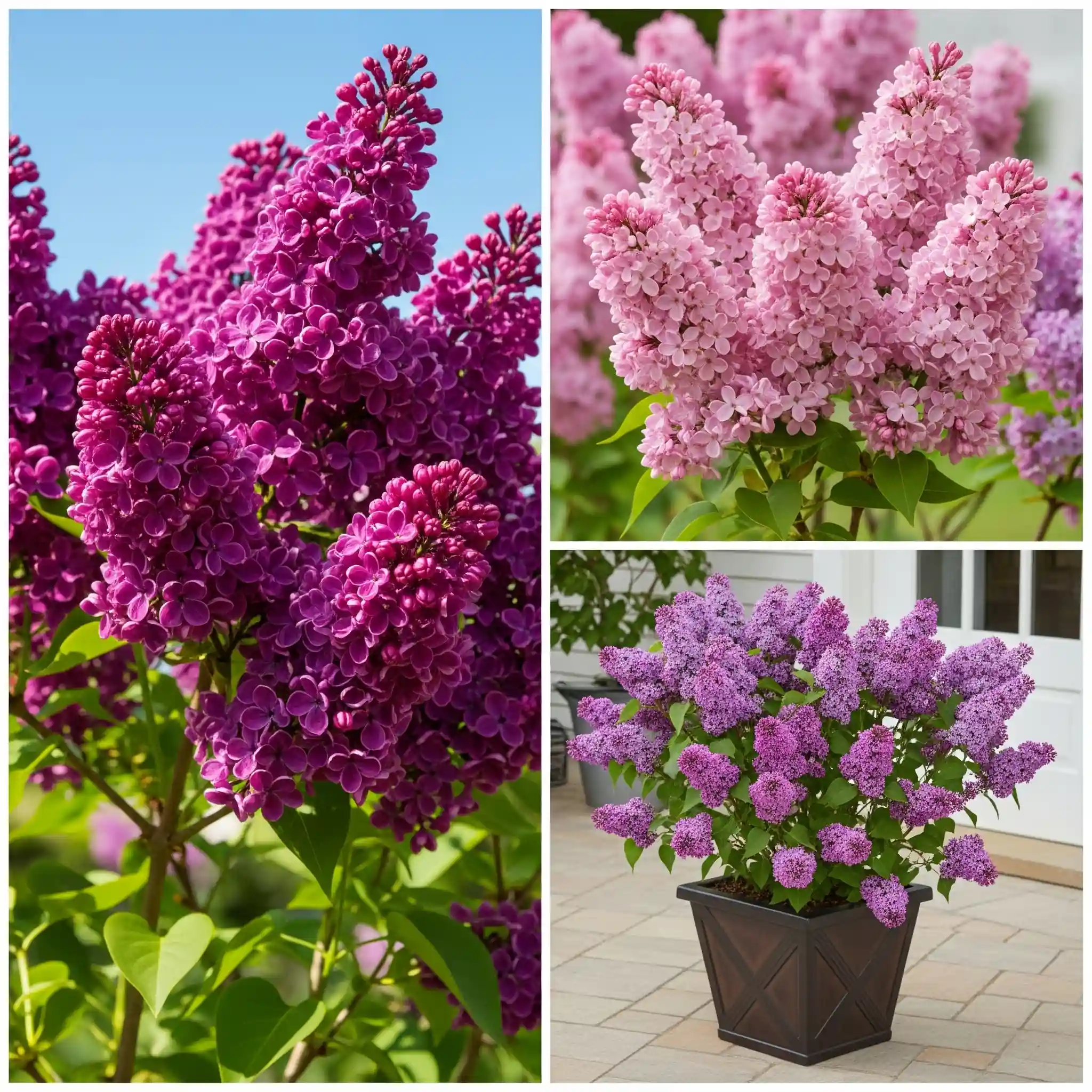
Bloomerang lilacs are everywhere in nurseries, and the reblooming feature—flowers in spring, rest, then flowers again from summer through fall—makes them genuinely appealing. The honest answer for zones 8 and 9, though, is that Bloomerang is not reliably suited for your climate.
According to Proven Winners, the developer of the Bloomerang series, these plants are rated hardy in zones 3a–7b. That’s not a conservative estimate—it reflects a real chill hour requirement that zones 8 and 9 consistently don’t meet. In zone 8a with a reliably cold winter (which happens in the Texas Hill Country, parts of New Mexico, and higher-elevation Southwest gardens), Bloomerang may bloom in spring some years. But it won’t be consistent, and in mild winters it often won’t bloom at all.
Zone 8b and zone 9 gardeners should treat Bloomerang as a high-risk experiment rather than a reliable choice. If you’re committed to trying it, the Bloomerang care guide covers the conditions that give it the best chance.
For gardeners who want the reblooming feature in warm climates, dwarf varieties of the Descanso hybrids—or the compact Miss Kim paired with a repeat-blooming rose or buddleia for summer interest—are more satisfying long-term solutions.
How to Grow Lilacs in Zones 8-9: 5 Critical Differences

Even the right variety will disappoint if your cultural approach is borrowed from a Minnesota or Massachusetts lilac guide. Zones 8 and 9 require five deliberate adjustments.
1. Site for Afternoon Shade
In zones 8 and 9, afternoon sun between 1 p.m. and 5 p.m. can push leaf temperatures well above what lilac foliage tolerates comfortably. Morning sun—ideally 4–6 hours of direct light before noon—gives lilacs the solar input they need for photosynthesis and bud development without the heat stress that comes from western exposure.
A site that faces east or gets dappled shade from a taller tree in the afternoon is ideal. This doesn’t mean deep shade—lilacs need sun to bloom, and full shade will produce vegetative growth with no flowers regardless of variety. The goal is morning sun with afternoon relief. This matters more in zone 9 than zone 8a, where summer temperatures routinely exceed 100°F in the afternoon.
2. Get the Soil pH Right Before You Plant
Lilacs are one of the few flowering shrubs that actively prefer alkaline soil, with an optimal pH range of 6.5–7.5. According to both NC State Extension and UMN Extension, soil pH near 7.0 is ideal. This creates opposite problems in two common zone 8-9 soil types:
Gulf South (Texas, Louisiana, Alabama, Georgia): Soils are often acidic—red clay in Georgia typically runs pH 5.5–6.2—which suppresses lilac blooming and encourages powdery mildew. Amend with agricultural lime before planting, targeting pH 6.8–7.0. Test annually and re-amend as needed.
Southwest and California interior (zones 8-9b): Soils can be naturally alkaline, sometimes above pH 8.0 in caliche-heavy areas. Lilacs actually tolerate mild alkalinity well—the 6.5–7.5 range is a target, not an absolute—but pH above 8.0 causes iron chlorosis. In very alkaline soils, incorporate sulfur or acidifying fertilizer to bring pH down before planting.
The lilac soil guide covers amendment rates and soil testing in detail.
3. Use the Dormancy Trigger (Most Varieties Need It)
This is the technique that separates zone 8-9 gardeners who get blooms from those who don’t, and in my experience it’s the most commonly skipped step—even by gardeners who have the right variety in the ground.
In cold climates, lilacs enter dormancy naturally when autumn rain stops and temperatures drop simultaneously. In zones 8 and 9, temperatures don’t drop sharply in autumn, and rain patterns vary widely—so the plant may never fully enter dormancy, spending the winter in an in-between state that prevents proper bud development.
The fix is deliberate: stop irrigating your lilac completely in early September. Let the soil dry down. Keep it dry through September and October. Resume watering in late February, when you can see the buds beginning to swell. This artificial dry period mimics the drought that precedes autumn dormancy in cold climates, giving the plant the hormonal signal to shut down properly.
The exception is ‘Blue Skies’—as noted above, this cultivar reportedly enters dormancy without this intervention. All other Descanso hybrids, Miss Kim, and Excel benefit from the dry-down period.
Don’t fertilize after late June in warm zones. A late nitrogen push encourages vegetative growth at exactly the time the plant should be slowing down before dormancy.
4. Water Deeply, Not Often
Lilacs in zones 8-9 face a double risk from poor watering: drought stress from insufficient water, and root rot from too-frequent irrigation in warm soil. Both kill flowering before heat stress does.
During the growing season (late February to early September), water deeply every 10–14 days in the absence of meaningful rainfall. ‘Deep’ means saturating the root zone—roughly 12–18 inches—not wetting the surface. A slow soak with a soaker hose for 45–60 minutes is better than daily light watering.
Lilacs need well-drained soil above all else. If your native soil is heavy clay—common in the Gulf South—raise your planting area 8–12 inches with amended soil or plant on a slight natural slope. Sitting water in summer soil in zone 8 is fatal, usually within a single growing season. Refer to the lilac care hub for additional drainage tips.
5. Prune Immediately After Bloom—and Never in Fall
Lilacs set next year’s flower buds on the growth made after this year’s bloom. That means any pruning you do after July removes buds that are already forming for the following spring. In zone 8-9, where the growing season after bloom is longer than in northern gardens, this rule is both more important and more commonly violated.
Prune within 2–3 weeks of the last flowers fading. Remove spent flower clusters back to the first pair of leaves below them. If you need to shape the plant or remove old crowded stems, do it at the same time—immediately post-bloom—not at the end of summer when it’s convenient. Never cut back lilacs in September or October: those branches carry next spring’s flowers.
Miss Kim specifically blooms on old wood and is especially sensitive to late pruning. According to NC State Extension, pruning out of season is one of the most common reasons a healthy Miss Kim fails to bloom the following year.
Frequently Asked Questions
Can common lilacs (Syringa vulgaris) grow in zone 8?
They can survive—growing as a shrub and putting out leaves each spring. But blooming is unreliable in zone 8 and essentially impossible in zone 9, because common lilacs need 800+ chill hours that these zones rarely provide. For reliable blooms, use the Descanso hybrids, Miss Kim, or ‘Excel’ instead. The not-blooming troubleshooter covers all the reasons a lilac might refuse to flower, including chill hour deficiency.
What’s the best lilac for zone 9 specifically?
The Descanso hybrids—’Lavender Lady’, ‘Angel White’, ‘California Rose’, and ‘Blue Skies’—are the only lilacs bred specifically for zone 9 conditions. Of these, ‘Blue Skies’ is considered the most reliable heavy bloomer, and it’s the only one that doesn’t require the autumn water-withholding dormancy technique. Miss Kim may also bloom in zone 9 in cooler years, but it’s officially rated only to zone 8b.
Do I have to withhold water in autumn to get my lilac to bloom?
For most low-chill lilac varieties in zones 8-9, yes—the late-summer dry-down is important for triggering proper dormancy. Stop irrigating in early September and resume in late February when buds begin to swell. The exception is ‘Blue Skies’, which blooms without this intervention. In climates with naturally dry autumns—parts of California, Arizona, New Mexico—you may already be doing this without realizing it.
Can I grow zone 8-9 lilacs in a pot?
Miss Kim is the most practical option for container growing in warm zones, given its compact size (4–9 feet). Container plants dry out faster than in-ground plants—which is actually advantageous for the autumn dormancy trigger—but require more careful watering in summer to prevent heat stress. Use a large container (at least 15 gallons) with excellent drainage. The lilac in pots guide covers container specifics in detail.
My lilac bloomed the first year but not since. What happened?
This is a classic warm-zone pattern: nursery-grown lilacs are often forced or pre-chilled before sale, producing that first flush of flowers from stored energy. Without sufficient chill hours in your climate, the plant can’t set buds for a second bloom cycle. If you’re growing a standard S. vulgaris cultivar in zone 8 or 9, the solution is to replace it with a Descanso hybrid or Miss Kim. If you’re already growing one of those varieties, check whether you’re using the dormancy trigger technique in late summer, and verify your soil pH is in the 6.5–7.5 range.
Sources
- NC State Extension Gardener Plant Toolbox — Miss Kim Lilac (Syringa pubescens subsp. patula)
- NC State Extension Gardener Plant Toolbox — Syringa x hyacinthiflora (Early Flowering Lilac)
- University of Minnesota Extension — Growing Lilacs for Minnesota Landscapes
- University of Minnesota Extension IPM Blog — Understanding Dormancy and Chilling Hours in Perennial Fruit Crops
- Sunset Magazine — Mild-Climate Lilacs (Descanso Hybrid Variety Guide)
- Proven Winners — Bloomerang Dark Purple Reblooming Lilac


