

A Guide to Where Tree Planting Has the Most Effect on Climate

You might be wondering why where you plant trees for climate change is so important. After all, aren’t all trees helpful for the environment? The truth is much more complicated and interesting. Recent groundbreaking study from UC Riverside shows that where you plant trees can have a big effect on the climate, either cooling it down a lot or not at all, or even warming it up by accident.
This in-depth guide explains the science behind smart tree planting, telling you exactly where forests have the most positive effects on the climate and why tropical areas are the best at storing carbon and cooling the air.
The groundbreaking study that came out in npj Climate and Atmospheric Science looked at data from 12 climate models and found something amazing: planting trees in tropical areas can cool the air up to three times more than planting trees in temperate areas. In some tropical areas, the cooling effects can be as high as 0.8°F.
The Science Behind Climate Change That Depends on Where You Are
You might be surprised to learn that not all trees cool the Earth in the same way. The place you plant a tree can have a big effect on the climate, in fact. I’ve been studying environmental science for a long time, and this new discovery has completely changed the way we think about ways to replant trees.
How Trees Keep the Earth Cool
You can think of trees as nature’s air conditioners. When you sweat on a hot day, the water on your skin evaporates and cools you down. Trees produce something very similar called “evapotranspiration,” which means “tree sweating.”
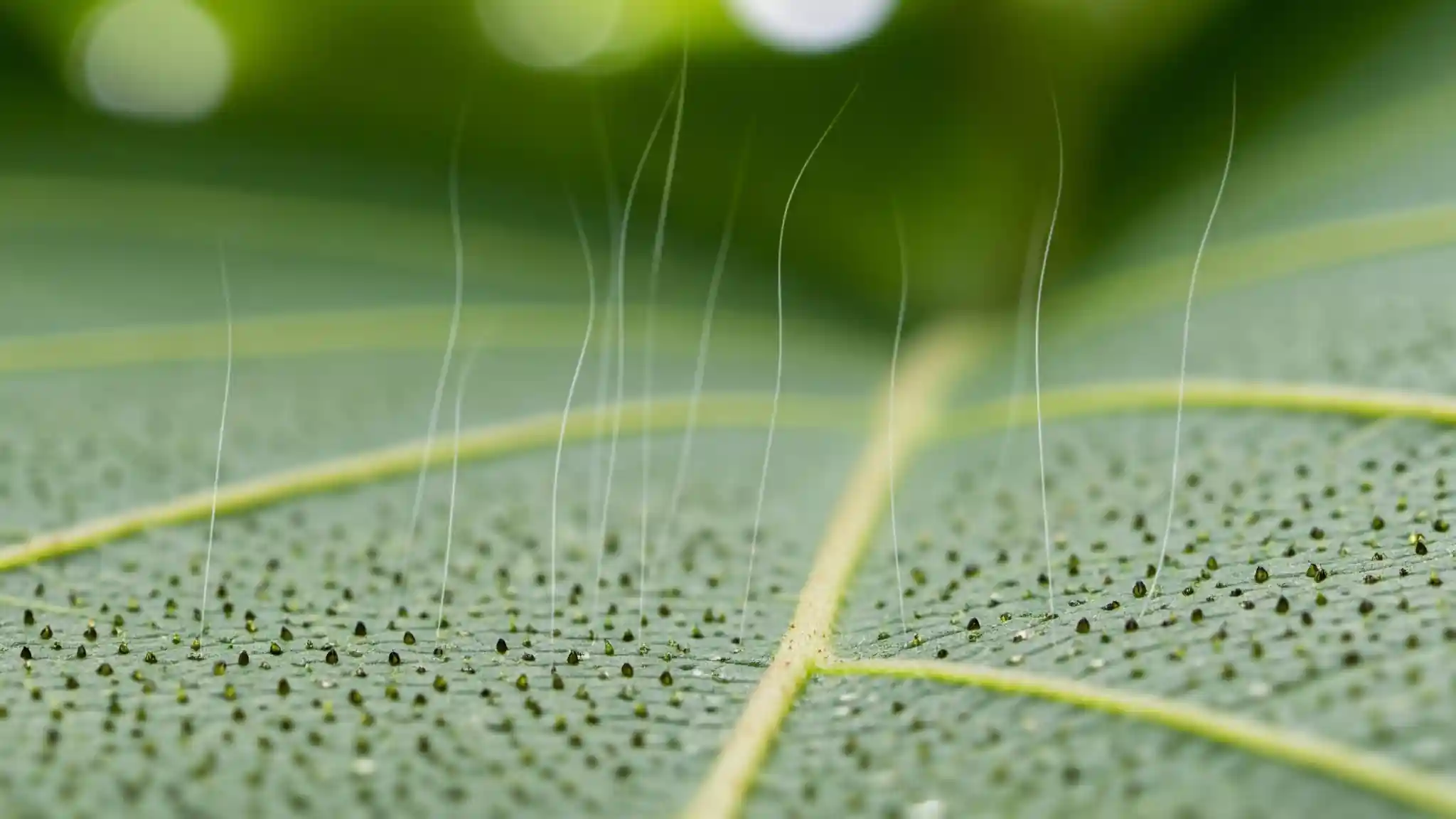
Tree roots pull water from the ground, and then the water goes up the trunk and into the leaves. Some of the water in the air evaporates when the small pores in leaves open to take in carbon dioxide for photosynthesis. The air and the tree both cool down during this process of evaporation.
James Gomez, the lead researcher from UC Riverside, said, “It’s just like how sweating cools your body. Trees in the tropics always have access to water, which makes transpiration happen more.”
The Benefit of Carbon Absorption
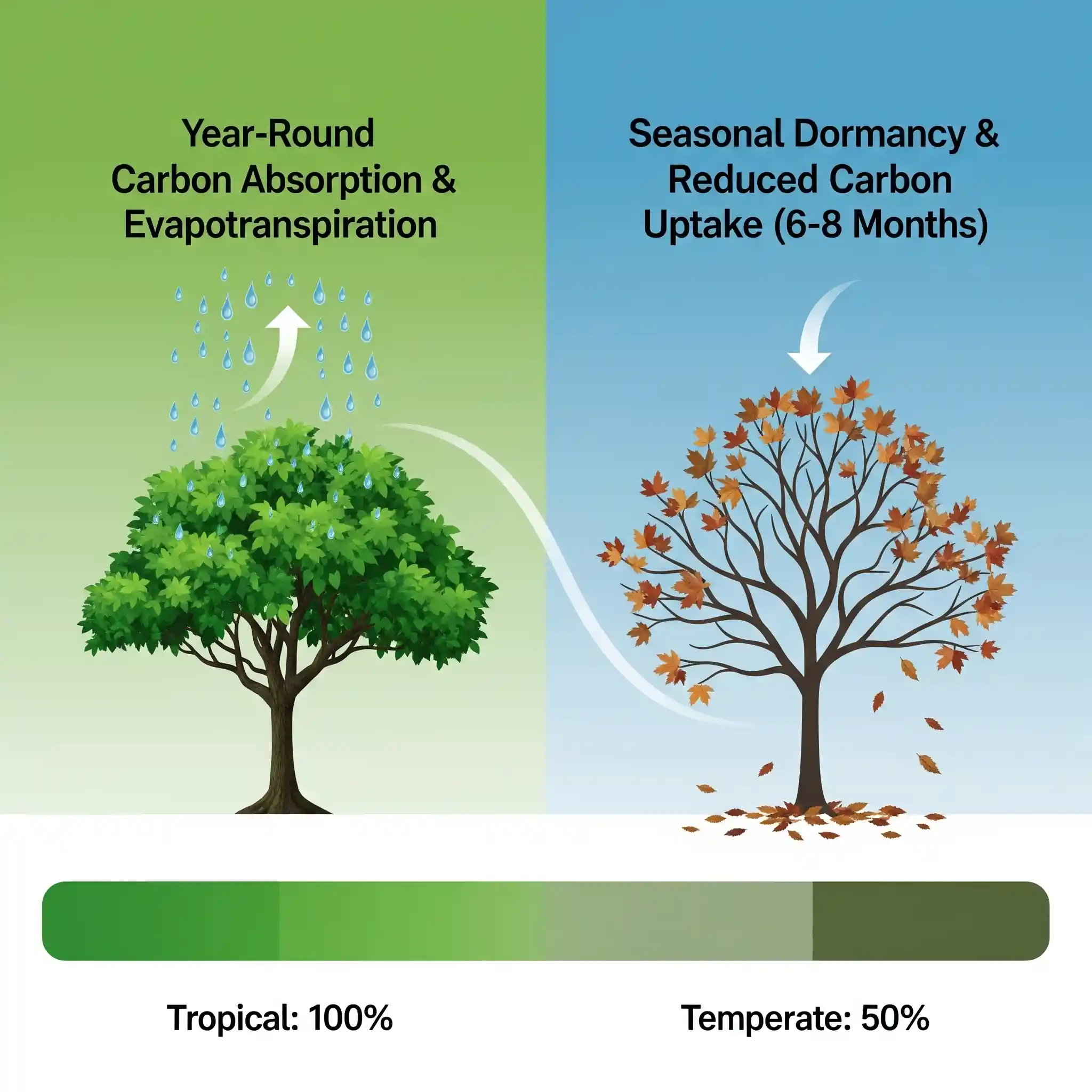
Trees are great at taking up carbon, but their usefulness varies a lot depending on where they are. Trees in tropical areas grow all year, which means they are always taking carbon dioxide out of the air. Because of this continual growth cycle, a tropical tree may take in a lot more CO₂ over its existence, while a temperate tree goes dormant for a few months each year.
The facts are shocking: temperate trees can only take in carbon for 6 to 8 months a year, but tropical plants do it all year long. It’s like comparing someone who works part-time to someone who works all the time.
More Climate Mechanisms
Trees affect the weather in many other interesting ways:
- Cloud Formation: Trees make the air more humid by releasing water vapor. Clouds can form from this increased moisture, and they reflect sunlight away from the Earth’s surface, which cools things down even more.
- Reflection of sunlight: The water vapor might take in some of the sunlight that comes in, which means that less solar energy reaches the earth.
- Heat Absorption: Tree canopies provide shade and soak up heat that would otherwise warm the ground and the air around it.
Researchers found that the physical cooling mechanisms alone made up about 0.01°F of global cooling, with even stronger local consequences in tropical areas.
Why the Climate Benefits Are Mostly in Tropical Areas
You might be asking yourself, “What makes planting trees in the tropics so much better?” After doing a lot of study, I found out that it’s like comparing a sports car to a bicycle: both get you where you need to go, but one does it with a lot more power and speed.
Growing Seasons All Year Round Have the Most Effect
Trees in tropical areas never stop working. There is no winter dormancy, which means that growth and carbon absorption don’t stop in the winter. This means that tropical trees can take in carbon dioxide all year round, while temperate plants might only be able to do so for 6 to 8 months out of the year, a fact supported by studies on the temperature dependencies of tree growth.
If you had two savings accounts, one that earned interest all year and another that only earned interest half the year, which one would grow faster? That’s pretty much what’s going on with tropical and temperate carbon sequestration.
Better access to water makes cooling better.
Evapotranspiration happens best in tropical areas since there is always water there. James Gomez, the lead researcher, says, “In the tropics, trees always have access to water, which makes transpiration go up.” Tropical trees can keep their cooling output at its highest level without the stress periods that temperate plants go through when it gets dry.
Benefits of Fire Suppression
When I first heard about it, I was startled to find that tropical trees are natural firefighters. Gomez says that trees are significantly more resistant to fire than grasses in tropical savannas and other locations throughout the world, a concept detailed in studies on the global distribution of ecosystems in relation to fire. This means that tropical reforestation not only cools the climate, but it also lowers the risk of fire, which is good for climate stability in two ways.
When fires are put out, more carbon stays in plants instead of going into the air. It’s like having a natural fire department and a place to store carbon at the same time.
The numbers are true.
The study shows some really interesting numbers:
- Effect of tropical cooling: Up to 0.8°F in places like central Africa
- The world average: 0.01°F from only the physical effects
- Carbon amplification: an extra 0.15°F cools down when carbon sequestration is added
- Fire resistance: Much higher than grasslands in the same areas
These data show genuine, verifiable advantages to the climate that add up over time.
The Unexpected Problems of Planting Trees in Temperate Areas
This is when things get extremely intriguing, and maybe a little strange. We typically imagine that “more trees means better climate outcomes,” but in temperate and northern areas, things are more complicated than you may think.
The Albedo Effect: When Trees Make Things Warmer Instead of Cooler
Think about how it might feel to wear a black jacket on a snowy day. The clothing absorbs sunshine and heat, but the snow around it reflects it away. This is pretty much what happens when you plant dark-colored trees in areas that get a lot of snow: they soak up more heat than the white snow they replace.
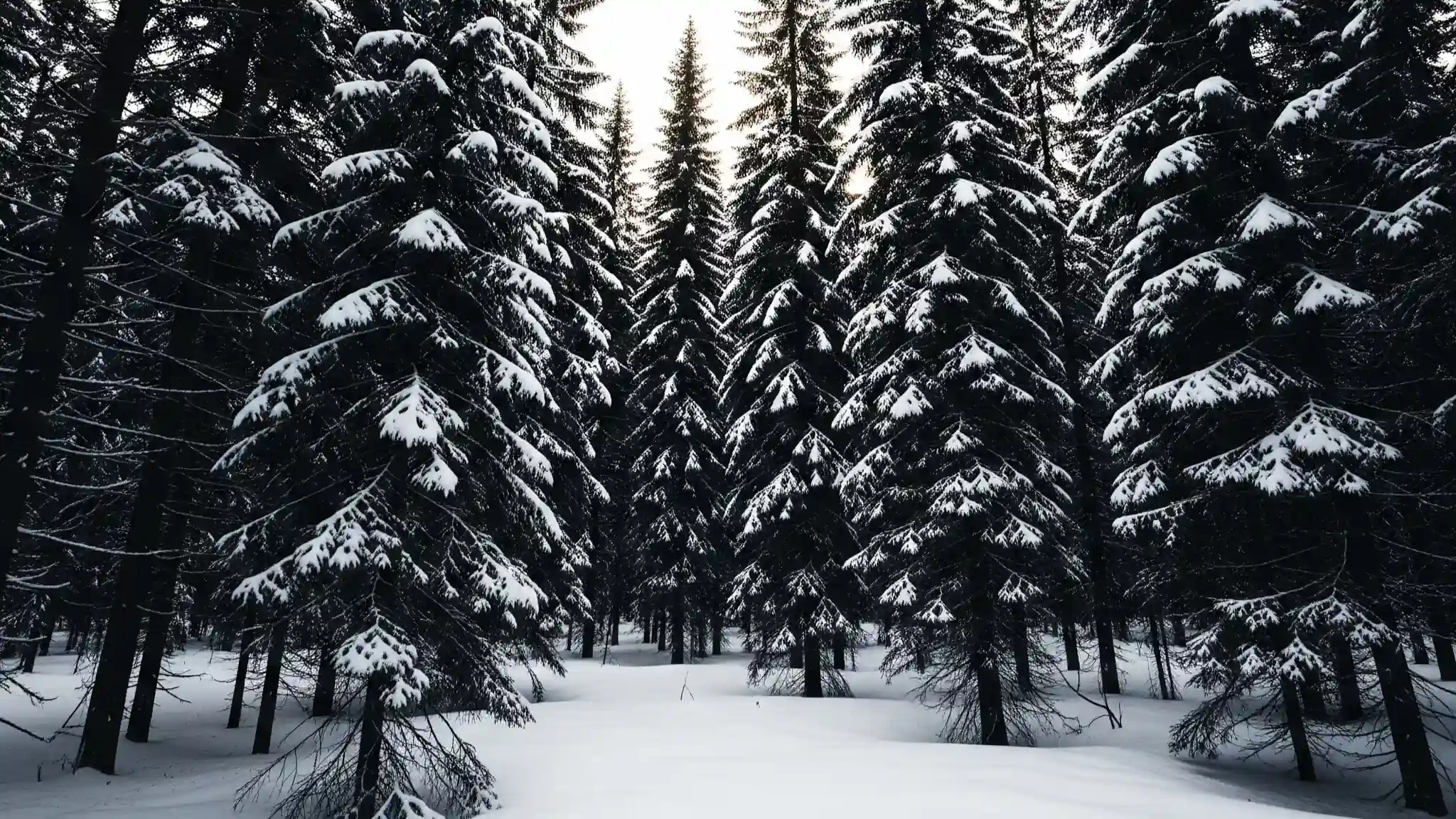
The albedo effect is what this is called, and it can actually lead some northern places to get warmer overall. The study showed that “in some parts of Canada and the northeastern U.S., trees would probably start more fires and make things hotter by taking in too much sun.” It’s one of those interesting cases where what we think is good for the environment isn’t what science says is true, as explored in research on the effects of afforestation on albedo.
Dormancy in the off-season makes things less effective.
In temperate areas, trees very much take a vacation for a few months every year. During the winter dormancy period, they stop developing and taking in a lot of CO₂ and cease their processes of cooling through evapotranspiration. This seasonal shutdown has a much smaller effect on the climate over the course of a year than their tropical cousins.
I prefer to think of it as the difference between a full-time and a seasonal worker. Both help, but the full-time worker adds value all year long.
Stop missing your zone's planting windows.
Select your US zone and month — get a complete checklist of what to plant, prune, feed, and protect right now.
→ View My Garden CalendarProblems with Fire Risk
It’s surprising, but planting trees in some temperate areas can actually make fires more likely. When flames do happen, dense forest canopies might make them more likely and more intense. This is especially worrying in places that are already known for having wildfires.
The Goldilocks Rule
This is when the idea of obtaining the “just right” answer becomes very important. Gomez wisely says, “What we need is a Goldilocks zone of trees in each region. Just the right amount to have the strongest and most positive climate effects.”
The key isn’t to completely avoid growing temperate trees; it’s to realize that:
- Location is important: Some temperate places have great climate benefits.
- Choosing the right species is very important: native species that are used to local conditions do better.
- Optimizing density: Too many trees might cause issues, while too few trees restrict benefits.
Taking into account the local climate and ecosystems should help you make decisions.
Important Clarification
Before you start to worry about temperate forests that are already there, let me stress what Gomez said: “This is not an encouragement to get rid of the trees growing there! They help ecosystems and biodiversity in many ways, and they also lower CO₂ and cooling up the spaces around it.” The study shows that there are ways to improve new planting, not difficulties with the woods that are already there.
Strategic Tree Planting: Choosing the Right Species for the Right Climate
I’ve learnt a lot about environmental restoration initiatives over the years. One thing I’ve learned is that effective tree planting is like matchmaking: you have to identify the right species and the right place to put them. Let me tell you what I’ve learned about making these matches work.
The first step is to assess your climate zone.
You need to know your specific situation before you plant any trees. These are the first questions I always ask:
- What are your average high and low temperatures throughout the year?
- Rainfall patterns: When does it usually rain and how much?
- Humidity levels: Is the place you live naturally wet or dry?
- Soil characteristics: What kind of soil do you have, and how well does it drain?
- What plants are already doing well in your area?
I always urge folks to look at the trees that are currently doing well in their area first. These trees have already passed nature’s tests, so you may use them to help you choose the right species.
Native Species: The Best for the Climate
From working on restoration projects, I’ve discovered that native species are usually always the best choice for making the biggest difference in the climate. These trees have changed throughout time to fit the needs of your area, so they’ll:
- They grow faster since they are used to the weather and soil in the area.
- Once established, they need less water, which means less work for you.
- Help more animals live in the area, which is good for the ecology as a whole.
- Fight off local pests and diseases naturally
- Blend in perfectly with the plant groups that are already there
In tropical areas, think about creatures like:
- Natives that grow swiftly and can quickly blanket the canopy
- Plants with deep roots that get water from the earth for steady evapotranspiration
- Fire-resistant types that offer natural protection
For temperate zones, pay attention to:
- Deciduous plants that let in sunlight in the winter but keep things cool in the summer
- Varieties that can manage changes in the weather and are resistant to drought, especially considering the risks of widespread drought-induced mortality.
- Strategic evergreens for windbreaks and taking in carbon all year round
Finding the Right Planting Density
The “more is better” way of thinking is one of the main blunders I encounter in tree planting programs. The truth is that the best density is really different for different places and species. There can be too many trees:
- Competition for resources that slows growth
- Higher risk of fires in specific places
- Less efficient cooling since air can’t circulate freely
The study stresses the importance of identifying the “Goldilocks zone,” which is the perfect quantity of trees for the best climate benefit.
Getting the soil ready: How to help your trees grow well
You can’t just put a tree in the ground and hope for the best. To get the most out of climatic benefits, you need to prepare the soil properly:
- Testing your soil: Find out its pH, nutrient levels, and how well it drains.
- Adding organic matter will make the soil better at holding water and structuring itself.
- Drainage optimization: Make sure the water flows correctly to stop root rot.
- Mulching strategies: Keep the soil moist and keep weeds from growing.
Expectations for the timeline: Knowing what you’re investing in
Planting trees to help the climate is a long-term commitment, not a fast fix. Based on studies of several forestry efforts, here’s what you can usually expect:
- Years 1–3: The establishment phase, when the climate has little effect
- Years 4–10: Rapid growth phase, more carbon absorption
- Years 10 and up: Full-grown phase, most benefits for the climate
Some tropical plants that grow quickly can start to give big benefits in 4 to 5 years. Temperate species, on the other hand, may take 7 to 10 years to attain their best performance.
Staying away from common mistakes
Based on my work on many planting projects, below are the most typical mistakes to avoid:
- Monoculture planting: forests with a lot of different kinds of trees are stronger and work better.
- Not paying attention to water needs: Trees that can handle drought nevertheless need water when they are growing.
- Bad site selection: Stay away from places that are likely to flood, erode quickly, or become contaminated.
- Not enough follow-up care: Young trees need to be watched and cared for for a few years.
Ethical Issues
The UC Riverside study employed “a relatively realistic scenario, planting trees in places where they have been removed, avoiding deforestation, and limiting new trees to places where they would not displace people or too much agricultural land.” This moral way of thinking should govern all planting activities, especially considering the global consequences of land use.
The Full Climate Benefits of Strategic Planting: Beyond Carbon
Carbon sequestration receives a lot of attention, but I’ve learned that trees are like nature’s Swiss Army knives—they help the climate in many ways, not only by taking in CO₂. Let me show you these benefits that people often forget about that make strategic tree planting even more useful.
Reducing Urban Heat Islands: Natural Air Conditioning
If you’ve ever strolled from a parking lot that was hot from the sun to a park that was cool from the shade, you’ve felt one of the most immediate temperature benefits of trees. This effect is very strong and easy to see in cities. Trees can lower the temperature of the air around them by 2–8°F by shading and evapotranspiration.
Research from cities like Phoenix and Atlanta has shown that communities with a lot of trees might be up to 9°F colder than places with little plant life. That’s not just comfort; it also means using less energy, paying less for electricity, and putting less stress on power grids during heat waves.
Preventing floods and managing water
I was shocked to find that trees are really advanced systems for managing water. A full-grown tree can soak up more than 50 gallons of rainwater every day, and forests can cut down on surface runoff by up to 75%.
As climate change causes more heavy rain events, this ability to stop floods is becoming more and more useful. In a way, trees are:
- Sponges that soak up extra rainwater in nature
- Speed bumps that slow down flow and stop erosion
- Underground storage systems that keep water in the soil and let it out slowly
Natural pollution filters can help improve air quality.
In addition to carbon dioxide, trees get rid of many other air pollutants that are bad for both the environment and people’s health. One full-grown tree can get rid of 12 pounds of CO₂ every year, but it also sorts:
- Small particles that make pollution and breathing difficulties worse
- Ozone precursors that cause pollution at ground level
- Nitrogen oxides that come from cars’ exhaust
- Sulfur dioxide that comes from factories
The EPA says that trees in cities take out millions of tons of air pollution every year, which saves billions of dollars in health costs.
Creating wildlife habitats: helping ecosystems stay strong
Strategic tree planting makes habitat corridors that help animals and plants adapt to changes in the weather. These green corridors let different species:
- Move to places with better climates when the weather changes
- Get to different kinds of food when the seasons change.
- Get out of the weather when it becomes too bad.
- Keep genetic diversity by making more links between habitats.
Healthy ecosystems are better able to handle changes in the climate. This creates a positive feedback loop in which trees support wildlife, which in turn supports forest health by spreading seeds and keeping pests under control.
Benefits for mental health and the community
The mental health advantages of trees don’t have anything to do with climate change, but they do help people support climate action. Studies repeatedly demonstrate that access to green spaces:
- Lessens tension and anxiety in city dwellers
- Helps kids and adults think better
- Encourages people to be active outside, which is good for their health.
- Brings people together in the community through shared green areas
People in communities that care about their trees are more inclined to support bigger climate projects, which leads to more environmental action.
Benefits of the Economic Climate
The economic benefits of planting trees in a planned way make people want to take action on climate change:
- Saving energy: Trees that are in the right places can cut cooling expenses by 15–35% and heating costs by 10–15%.
- Property values: Neighborhoods with trees along the streets usually have property values that are 3–7% greater.
- Lower health care costs: Better air quality lowers the cost of medical care
- Protection of infrastructure: Trees help keep storms from damaging things and make pavement last longer.
Natural Infrastructure for Stormwater Management
Trees and woods are natural stormwater management systems that cut down on the requirement for expensive gray infrastructure:
- Canopy interception: Leaves collect rain before it touches the ground.
- Absorption through the root system: Large root networks move water into the soil.
- Improving the soil: Tree roots make channels that make the soil more permeable.
- Groundwater recharge: Forests help to refill water supplies that are underground.
As climate change causes more severe rain events, this natural infrastructure becomes more and more valuable.
Storing Carbon Beyond the Tree
We usually think about carbon stored in tree trunks and branches, however judicious planting makes carbon storage in:
- Organic matter in the soil: Over time, tree roots and leaf litter add carbon to the soil.
- Roots that grow underground: These can hold 20–25% of the tree’s total carbon.
- Plants that grow in the understory and on the ground cover contribute more storage.
- Long-lasting wood products: Buildings and furnishings made from harvested wood can store carbon for decades.
What You Can Do: Your Own Plan for Planting Trees
After years of research and working on many community projects, I have come up with a useful framework that anyone can use to help with tree planting that focuses on climate change. This is your step-by-step guide to making a meaningful difference, whether you have a small backyard or are planning a communal project.
Step 1: Figure out how much of an impact you can have in your area
You need to know your own circumstances before you plant anything. I always start by asking these important questions:
- What zone is your climate in? To learn about your growing conditions, use the USDA Plant Hardiness Zone Map or a similar map for your nation.
- What is the pattern of rainfall in your area? This tells you if you should focus on plants that like water for the most evapotranspiration or plants that can handle drought.
- What kind of soil do you have? Loam, clay, or sand? Different methods are needed for each to get the best tree growth.
- How much room do you have? Be honest about how big and deep the roots of mature trees are.
If you live in a tropical or subtropical area, you’re in the best climate for greatest impact. Concentrate on native plants that grow quickly and can quickly set up the evapotranspiration cooling action that makes tropical planting so successful.
For temperate areas, your plan should focus on choosing the right species and putting them in the right places to get the most benefits while avoiding the problems that the research found.
Step 2: Get in touch with useful programs
No matter where you reside, one of the best things you can do is support organizations that help reforest tropical areas. These are the kinds of groups I think are best:
- Research-based planting plans that employ studies like the one at UC Riverside to help them decide where to plant
- Community-based programs that work with people who live there instead of moving them
- Long-term monitoring initiatives that keep track of real carbon sequestration and climate benefits
- Organizations that are open and honest about how well trees are doing and how many of them survive
When looking into programs, find out how many trees they can keep alive, how they choose species, and how they measure the effects of climate change. After three years, good programs should have tree survival rates of 70% or above.
Step 3: Best practices for planting in your area
If you’re planting in your area, here’s how I do it:
- Start small and learn: Plant 1–3 trees to see what works best for you.
- Pick the right places:
- For summer shade and energy savings, the south and west sides of buildings
- Windward sides for protection from the wind
- Surfaces that are almost impermeable to get the most out of stormwater
- Choose the right species:
- Species that are native to the area and help local ecosystems
- Choose the proper tree for the right spot, taking into account how big it will get.
- Varieties that will do well when the weather changes and are right for the climate
- Get ready the right way:
- Test the soil and make changes as needed.
- Make sure there is enough drainage
- Make plans for upkeep for a few years.
Step 4: Keep track of and measure your impact
A lot of people stop here, however it’s very important to keep track of your influence in order to understand how well you’re doing and stay motivated:
- Check the height, trunk diameter, and overall health of the tree every year to see how well it is growing and staying alive.
- Keep an eye on how much your heating and cooling bills change to save energy.
- Local temperature: Use a simple thermometer to find out how much warmer or cooler it is in shaded and unshaded locations.
- Community involvement: Keep track of how your work motivates friends and neighbors.
Step 5: Make Your Efforts Bigger
After you’ve set up your own trees, think about these ways to grow them:
- Neighborhood projects: Set up tree-planting events in your community
- School partnerships: Help schools in your area plant trees and teach kids
- Get involved in your city: Support urban forestry programs in your area.
- Partnerships with businesses: Work with businesses in your neighborhood to make commercial areas greener.
Helping Tropical Programs: Get the Most for Your Money
Even if you reside in a temperate area, promoting tropical reforestation has the biggest effect on the environment for every dollar you spend. The study clearly reveals that growing tropical trees can chill the air up to three times more than planting trees in temperate areas.
Look for programs that:
- Instead of turning natural grasslands into farms, plant in places where trees have been cut down.
- Work with others in your area to make sure your business lasts.
- Instead of monoculture plantings, use a variety of native species.
- Report clearly on how many trees survive and how quickly they grow.
Getting others in the community to help
I’ve learned that tree-planting projects that work well can lead to more climate action. This is how you get people in your community to help:
- Share the science: Help people understand why where you live affects the climate.
- Make it social: Get your neighbors together to plant things in groups.
- Celebrate your triumphs by writing down and sharing the good things you’re noticing.
- Link to other problems: Show how trees help with flooding, air quality, and energy prices.
Things You Shouldn’t Do
Here are some things to watch out for based on my work on several projects:
- Never plant without doing your homework first. Always know what’s going on in your area.
- Choosing the wrong species: Non-native or unsuitable species generally don’t work out.
- Not taking care of them: Young trees need care for a few years to grow.
- Overplanting: Keep in mind the “Goldilocks zone” rule: more isn’t necessarily better.
- Don’t plant in a way that moves people or hurts ecosystems that are already there.
Your Climate Impact Timeline
You can realistically expect the following from your tree planting efforts:
- Year 1: The tree is growing, the weather doesn’t affect it much, and it needs a lot of care.
- Years 2–5: steady development, more carbon absorption, and less maintenance
- Years 5 to 15: Rapid growth in impact, big cooling and carbon benefits
- Years 15+: Full impact, most benefits for the climate, and little upkeep needed
The most important thing is to start now and plan for the future. According to studies from UC Riverside, trees are best for the climate when they are fully grown and well-established. The trees you plant today will help the environment for many years to come.
James Gomez said in the study, “It’s not that planting somewhere else doesn’t help; it does; but the tropics offer the best returns per tree.” Every tree you plant in your yard or to help with global forestry is a step toward solving the climate crisis.
Are you ready to start planting trees? Start by looking into the best native plants for your area and seeing how they will do in your area. Keep in mind that the best tree to plant is one that does well in its location and is part of a bigger plan to reforest areas with a focus on climate change.
Sources and References
- Anderegg, W.R.L., et al. (2015). Widespread drought-induced mortality of trees in the Western US. Science.
- Baldocchi, D.D. (2017). Evaluating the eddy covariance method for measuring ecosystem carbon dioxide exchange rates: the VOCALS scientific campaign. Global Change Biology. https://doi.org/10.1111/gcb.13568
- Bond, W.J., et al. (2005). The global distribution of ecosystems in relation to fire. Global Ecology and Biogeography.
- FAO. (2020). Global Forest Resources Assessment. http://www.fao.org/forest-resources-assessment/en/
- Feddema, J.J., et al. (2013). Vegetation’s Role in Greening Earth. Journal of Climate. https://doi.org/10.1175/jcli-d-12-00915.1
- Foley, J.A., et al. (2005). Global Consequences of Land Use. Science.
- Gomez, J.L., et al. (2025). Climate Effects of a Future Net Forestation Scenario in CMIP6 Models. npj Climate and Atmospheric Science.
- IPCC. (2022). Climate Change 2022: Impacts, Adaptation and Vulnerability. https://www.ipcc.ch/report/ar6/wg2/
- Mykleby, P.M., et al. (2017). Quantifying the biogeophysical impacts of land-use change on climate. PNAS. https://doi.org/10.1073/pnas.1612063114
- Nowak, D.J., et al. (2014). Air pollution removal by urban trees and shrubs in the United States. Urban Forestry and Urban Greening.
- Pan, Y., et al. (2011). A Large and Persistent Carbon Sink in the World’s Forests. Science. https://doi.org/10.1126/science.1201609
- Peh, K.S.-H., et al. (2017). Conservation of Tree Biodiversity Faces Dire Threats. Forest Ecology and Management. https://doi.org/10.1016/j.foreco.2017.02.027
- Qu, W., et al. (2015). Effects of afforestation on albedo and climate. Environmental Research Letters.
- Reich, P.B., et al. (2016). Temperature Dependencies of Growth in Temperate and Tropical Tree Species. Ecology Letters.
- Schwartz, M.W., et al. (2020). Restoring Forest Ecosystems: Science and Practice. Science. https://doi.org/10.1126/science.abc0953


