

Plants That Repel Mosquitoes: 15 Natural Deterrents

Discover 15 plants scientifically proven to repel mosquitoes, from catnip (10x more effective than DEET) to lavender and citronella. Learn which compounds work, how to use them, and what the research actually says.
How Mosquito-Repellent Plants Actually Work
Fifteen plants contain volatile compounds proven to repel mosquitoes in laboratory research — but most articles about them leave out the part that matters. Growing these plants on your patio looks nice, yet a Clemson University review of 62 studies found zero evidence that landscape plantings alone reduce mosquito activity [1].
The real value of mosquito-repellent plants is not passive decoration. It is having a living supply of compounds like citronellal, nepetalactone, and p-menthane-3,8-diol that you can crush, burn, or extract whenever you need them. One of these compounds, from catnip, tested ten times more effective than DEET [5]. Another, from lemon eucalyptus, is the only plant-based ingredient the CDC recommends for disease protection [4].

Mosquitoes locate you by detecting the carbon dioxide you exhale and the lactic acid on your skin. Their antennae contain olfactory receptor neurons tuned to these chemical signals — and this is where repellent plants intervene [7]. Terpenes like citronellal, geraniol, linalool, and nepetalactone bind to those same receptors, effectively jamming the signal that leads mosquitoes to your skin.
The catch: these volatiles disperse too quickly in open air. Colorado State University confirms that no plant will repel mosquitoes by merely growing in a landscape [2]. The leaves must be crushed, oils released, or sprigs burned to generate enough concentrated compounds to create a meaningful barrier. As UF/IFAS horticulturist Liah Continentino puts it: “Unless you’re extracting their oils and applying them like a spray, they’re not doing much just sitting in your garden” [8].
Seasonal Garden Calendar
Know exactly what to plant, prune and sow — every month of the year.
That said, these plants give you a renewable source of repellent compounds right outside your door. Strategic planting combined with active leaf-crushing meaningfully reduces mosquito pressure around seating areas — especially when paired with the broader natural pest control strategies that eliminate breeding sites.
Plant Effectiveness at a Glance
This table compiles lab-tested data from peer-reviewed studies. Protection duration refers to extracted oils applied to skin — not passive growing [4][5][6].
| Plant | Active Compound(s) | Lab Repellency | Protection Duration | USDA Zones |
|---|---|---|---|---|
| Catnip | Nepetalactone | 10× more effective than DEET | Not yet field-tested | 3–7 |
| Lemon eucalyptus | PMD (p-menthane-3,8-diol) | 96–100% | 6–12 hours | 8–11 |
| Lavender | Linalool, camphor | High | Up to 8 hours | 5–9 |
| Citronella grass | Citronellal, geraniol | High | ~2 hours | 10–12 (annual elsewhere) |
| Lemongrass | Citronellal | 100% (lab) | 70–120 minutes | 9–11 (annual elsewhere) |
| Clove basil | Eugenol | 100% (Ae. aegypti) | Up to 225 minutes | Annual all zones |
| Thyme | Thymol, carvacrol | 97.3% | ~82 minutes | 5–9 |
| Lantana | Multiple terpenes | 50% indoor reduction (field) | Continuous (live plant study) | 8–11 (annual elsewhere) |
| Peppermint | Menthol | Moderate–high | 45–60 minutes | 3–7 |
| Rosemary | Camphor, 1,8-cineole | Moderate | ~15 minutes | 7–10 |
| Basil | Eugenol, estragole | Moderate | 30–60 minutes | Annual all zones |
| Lemon balm | Citronellal (up to 38%) | Moderate | 30–60 minutes | 3–7 |
| Marigold | Pyrethrin, limonene | Moderate | Variable | Annual all zones |
| Scented geranium | Geraniol, citronellol | Moderate | 30–60 minutes | 9–11 (annual elsewhere) |
| Allium | Allicin, sulfur compounds | Low–moderate | Variable | 3–9 |
Grasses and Groundcovers
1. Citronella Grass (Cymbopogon nardus)
Citronella is the most recognized name in natural mosquito control. The grass produces citronellal and geraniol, two terpenes that interfere with mosquito host-seeking behavior. Citronella oil protects for roughly two hours when applied to skin, but protection drops off fast because the compounds evaporate quicker than synthetic alternatives [4].
The live plant is a tall, clumping grass reaching 4–6 feet that thrives in Zones 10–12. In cooler climates, grow it as a summer annual in large containers and bring it inside before frost. Crush a handful of leaves and rub them between your palms before sitting outside — the difference is immediate.
2. Lemongrass (Cymbopogon citratus)
Often confused with citronella grass — they are related but distinct species — lemongrass contains higher concentrations of citronellal and provided 100% protection for 70–120 minutes in laboratory testing [4]. It is the more versatile choice because you can harvest it for cooking.
Lemongrass grows as a dense clump reaching 3–5 feet and is hardy in Zones 9–11. Elsewhere, treat it as an annual or overwinter containers indoors. Mississippi State University Extension lists lemongrass among the plants with the strongest evidence for deterring mosquitoes [3]. Position it along walkways where you will brush against the foliage, releasing oils as you pass.
3. Lemon Balm (Melissa officinalis)
Lemon balm belongs to the mint family and shares its aggressive spreading habit — grow it in containers or a contained bed. Its leaves contain citronellal at concentrations up to 38%, which is high for a temperate herb [4].
Hardy in Zones 3–7 and remarkably easy to grow, lemon balm tolerates partial shade and poor soil. It self-seeds prolifically. The upside of that vigor: you always have leaves to crush and rub on exposed skin. Mississippi State University Extension names it among the herbs with the strongest scientific support for mosquito deterrence [3].
Herbs
4. Basil (Ocimum basilicum)
Basil produces eugenol and estragole — compounds toxic to mosquito larvae and repellent to adults. Unlike most herbs on this list, basil releases its volatile oils without being crushed, making it one of the few plants that offers some passive repellency [4].
African basil (O. gratissimum) has the highest eugenol content, but common sweet basil still produces meaningful concentrations. Plant it in full sun in any zone as a warm-season annual. Position containers directly on outdoor dining tables for the strongest effect. For complete growing details, see our basil growing guide.
5. Rosemary (Salvia rosmarinus)
Rosemary oil contains camphor and 1,8-cineole, both documented mosquito repellents. Protection is short-lived — Clemson University notes roughly 15 minutes per application [1]. The better strategy: burn rosemary sprigs on a grill or fire pit. The smoke generates a sustained aromatic barrier that measurably reduces mosquito activity around the plume.
Hardy in Zones 7–10 and drought-tolerant once established, rosemary requires almost no maintenance. In cooler zones, grow it in containers and overwinter indoors. Its woody stems make excellent fire-pit kindling that doubles as insect repellent.
6. Peppermint (Mentha × piperita)
Menthol, peppermint’s signature compound, repels multiple mosquito species including the disease-carrying Aedes aegypti and Anopheles stephensi [4]. Peppermint oil also shows larvicidal activity at low concentrations.
Peppermint grows aggressively in Zones 3–7 and will colonize any available ground. Contain it in pots — this is not optional. Place pots near doorways and pinch stems regularly to release the oils. Crushed leaves make an effective rub for exposed skin, though the sensation is intense and some people find it irritating.
7. Sage (Salvia officinalis)
Sage contains camphor and thujone, both documented mosquito deterrents. Its most effective application is burned: dried sage bundles tossed onto a fire pit create dense, aromatic smoke that clears mosquitoes from the immediate area better than most other methods on this list.
Hardy in Zones 4–8, sage is a low-maintenance perennial that thrives in well-drained soil and full sun. Harvest and dry bundles in late summer for fire-pit use through the evening season.
8. Bee Balm (Monarda)
Bee balm produces thymol and carvacrol — the same antimicrobial compounds found in thyme oil that tested at 97.3% repellency in lab conditions [4]. These compounds deter mosquitoes while simultaneously attracting pollinators, making bee balm a genuinely dual-purpose garden plant.
Hardy in Zones 3–9, Monarda didyma and M. fistulosa are both effective. The plants reach 2–4 feet and produce showy red, pink, or purple flowers from midsummer through early fall — the peak of mosquito season. This is a plant you want in groups near patios.

Flowering Plants and Ornamentals
9. Lavender (Lavandula)
Lavender oil contains linalool and camphor, both proven mosquito repellents. Research published in the Malaria Journal found lavender oil provided up to 8 hours of complete repellency against Anopheles species — one of the longest durations of any plant-based compound tested [4].
Varieties with higher camphor content are the most effective repellents. Lavandula × intermedia ‘Grosso’ and ‘Provence’ outperform common English lavender for mosquito deterrence. Hardy in Zones 5–9, lavender demands excellent drainage and full sun. I keep a row of ‘Grosso’ along my patio edge and regularly brush against it walking outside — the released oil makes a noticeable difference on still evenings. For full growing details, see our complete lavender growing guide. Lavender also repels spiders, making it one of the most broadly useful pest-deterrent plants you can grow.
10. Marigold (Tagetes)
Marigolds contain pyrethrin and limonene — the same family of compounds used in commercial insecticide formulations. French marigolds (Tagetes patula) produce the highest concentrations.
Grow marigolds as annuals in all zones. They thrive in full sun and tolerate heat, drought, and poor soil. Plant them as a border around vegetable gardens and seating areas. Beyond mosquitoes, marigolds suppress root-knot nematodes in soil and deter whiteflies — they are among the most broadly useful pest-control plants you can grow.
11. Scented Geranium (Pelargonium graveolens)
True scented geraniums — specifically the rose-scented Pelargonium graveolens — contain geraniol and citronellol, both documented mosquito repellents. Their crushed leaves release a strong, pleasant aroma.
A critical warning: avoid the so-called “mosquito plant” (Pelargonium citrosum ‘Van Leenii’), marketed exclusively as a mosquito repellent. University of Guelph research found it has no repellent properties whatsoever, and Colorado State University confirms it does not contain citronella oil despite the name [2]. When shopping, look for Pelargonium graveolens or P. citronellum — these are the species with genuine repellent compounds.
12. Lantana (Lantana camara)
Lantana is the sleeper pick on this list. A peer-reviewed field study — not a lab test — found that placing lantana plants around homes in Tanzania reduced indoor mosquito density by 50% overall, with an 83% reduction in Anopheles funestus, a primary malaria vector [9]. This is one of the only studies showing significant mosquito reduction from live, unprocessed plants.
Hardy in Zones 8–11 and treated as an annual elsewhere, lantana thrives in heat and drought. Note: lantana is toxic to livestock and classified as invasive in some southern states — check local restrictions before planting.
13. Allium (ornamental onions)
Alliums produce allicin and other sulfur compounds that mosquitoes and many garden pests avoid. Ornamental varieties like Allium giganteum and A. ‘Purple Sensation’ add architectural drama while providing broad-spectrum pest deterrence.
Hardy in Zones 3–9, alliums are low-maintenance bulbs that naturalize over time. The tall flower stalks bloom in late spring and early summer — overlapping with the start of mosquito season. Garlic chives (A. tuberosum) provide continuous allicin release through summer and are edible.
The Research-Backed Standouts
14. Lemon Eucalyptus (Corymbia citriodora)
Lemon eucalyptus stands apart from every other plant on this list. Its derivative, p-menthane-3,8-diol (PMD), is the only plant-based repellent compound recommended by the CDC for use in disease-endemic areas [4]. PMD provides 96–100% protection lasting 6–12 hours depending on concentration — performance comparable to moderate-concentration DEET products.
The distinction matters: the CDC recommends oil of lemon eucalyptus (OLE), a refined extract enriched for PMD, not the raw essential oil. Growing the tree gives you access to leaves you can process, but commercial OLE products are the practical route to CDC-level protection. The tree is hardy in Zones 8–11 and reaches 60–100 feet at maturity — this is a landscape tree, not a patio pot plant.
15. Catnip (Nepeta cataria)
The strongest laboratory evidence for any plant on this list belongs to catnip. Iowa State University researchers Chris Peterson and Joel Coats found that nepetalactone — catnip’s essential oil — is approximately ten times more effective than DEET at repelling yellow fever mosquitoes [5]. At high doses, 80% of mosquitoes avoided the nepetalactone-treated area compared to just 40–45% for DEET.
Hardy in Zones 3–7 and easy to grow in any well-drained soil, catnip belongs to the mint family with the same aggressive spreading habit — container growing is wise. Crush leaves and rub on skin for the strongest effect. The obvious caveat: neighborhood cats will find your garden irresistible.
How to Get the Most Repellent Power From Your Garden
Growing these plants is step one. Getting actual protection requires active engagement.
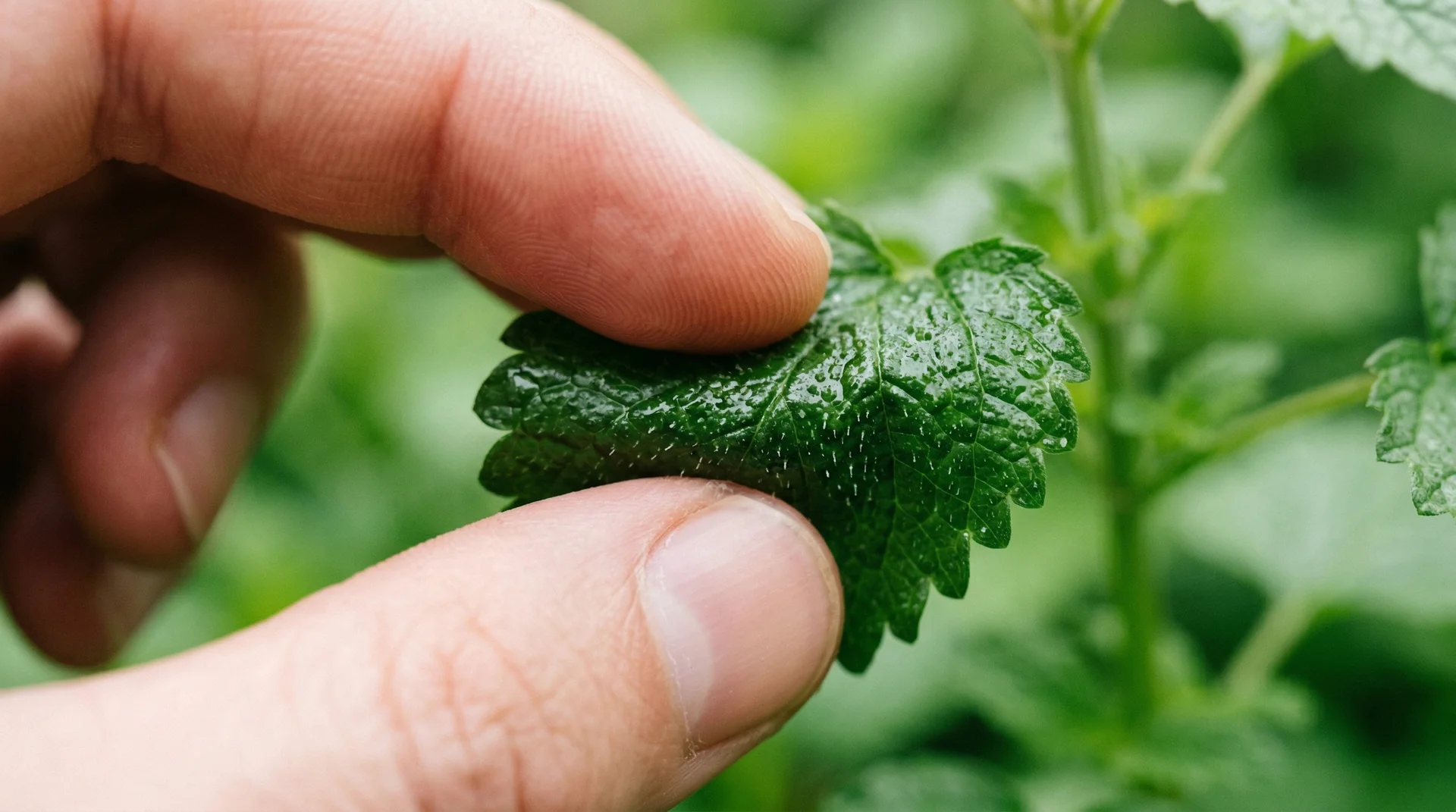
Crush and rub. The single most effective technique. Break leaves between your palms and rub on exposed skin. Lemon balm, basil, and catnip release oils most readily [1][3].
Plant in dense masses near seating. A single potted lavender contributes almost nothing. A dense herb border of 3–5 species within arm’s reach of your chair creates a meaningful volatile cloud, especially on still evenings when compounds linger rather than dispersing.
Burn sprigs. Toss rosemary or sage onto a fire pit or grill. The smoke carries concentrated terpenes farther than any potted plant can project on its own.
Eliminate standing water. No plant will overcome a nearby breeding site. A single bottle cap of water can support mosquito larvae [8]. Tip saucers, clean gutters, and refresh birdbaths weekly.
Layer your strategy. Combine repellent planting with companion planting principles. Use crushed-leaf rubs for personal protection, burned sprigs for area coverage, and for heavy mosquito pressure, pair garden plants with a PMD-based commercial spray. An integrated pest management approach that combines multiple tactics always outperforms any single method.

Frequently Asked Questions
Do mosquito-repellent plants actually work?
The plants produce compounds that repel mosquitoes — decades of peer-reviewed research confirms this [4]. The catch is that simply growing them provides minimal passive protection. You need to crush leaves, extract oils, or burn sprigs to release enough volatile compounds to create a meaningful barrier [1][2][8].
What is the most effective mosquito-repellent plant?
In laboratory testing, catnip (nepetalactone) is approximately ten times more effective than DEET [5], and lemon eucalyptus (PMD) is the only plant-derived compound recommended by the CDC. For practical garden growing in cold climates, lavender provides one of the longest-lasting oils at up to 8 hours of complete protection [4].
Does citronella grass really repel mosquitoes?
Citronella oil is a documented mosquito repellent that protects for roughly two hours per application [4]. However, a potted citronella plant on your patio releases far too little oil to create a meaningful barrier. Crush the leaves and rub the oil on skin for actual protection.
Is the “mosquito plant” worth buying?
No. The plant sold as the “mosquito plant” (Pelargonium citrosum ‘Van Leenii’) has been debunked by University of Guelph research and does not contain citronella oil despite its marketing [2]. Choose true scented geraniums (Pelargonium graveolens) instead.
Which mosquito-repellent plants grow in cold climates?
Seven plants on this list are cold-hardy perennials: catnip (Zones 3–7), lemon balm (Zones 3–7), peppermint (Zones 3–7), bee balm (Zones 3–9), lavender (Zones 5–9), sage (Zones 4–8), and alliums (Zones 3–9). All return year after year without replanting.
Sources
- Can Plants Repel Problematic Insects? — Clemson University Home and Garden Information Center
- Do Plants Repel Mosquitoes? — Colorado State University PlantTalk
- Can Fragrant Plants Help Repel Insects? — Mississippi State University Extension
- Plant-based insect repellents: a review of their efficacy, development and testing — Malaria Journal (Maia & Moore 2011)
- Catnip Repels Mosquitoes More Effectively Than DEET — ScienceDaily / Iowa State University
- Advances in mosquito repellents: effectiveness of citronellal derivatives in laboratory and field trials — PMC (2023)
- Volatile phytochemicals as mosquito semiochemicals — PMC (2014)
- Florida experts break down the buzz on the myth of mosquito-repelling plants — UF/IFAS Extension
- Repellent Plants Provide Affordable Natural Screening to Prevent Mosquito House Entry — PLOS ONE (Mng’ong’o et al. 2011)


