

How to Grow Asparagus in a Container: The Complete Long-Term Guide

One of the best things about gardening is growing your own asparagus. It’s a perennial promise: once you grow it, it will give you tender, tasty spears every spring for decades. It shows a promise to the soil and a hope for future crops. If you don’t have a lot of room in your garden, the concept of growing this long-lived crop on a patio or balcony could seem like an unreachable dream, something only people with big garden plots can do. But I want to tell you that it is not only doable, but also quite rewarding. It adds a touch of permanence and gourmet flavor to even the smallest of spaces.
But growing asparagus in a pot is a whole different kind of problem than growing it in the ground. It needs a change in how you look at things. A pot is a small universe, a closed ecosystem where you are in charge of keeping the plant alive. You need a distinct set of rules and, most crucially, a plan for the long run to be successful. Standard recommendations sometimes don’t help you much; they might tell you how to plant the crown, but then they leave you hanging a year later, when the real problems start. This guide is not like the others. We will treat your container asparagus like the long-term perennial it is. We will go into great detail about the science of container culture, how to maintain it over several years, and the most important ways to keep it alive over the winter so that you can enjoy this luxury crop for many years to come.
Is it worth it to grow asparagus in a pot? A Realistic View
It’s crucial to be transparent and honest about what you expect before we start. When you only have a pot, it’s a big job to grow a perennial crop that can thrive in the ground for more than 20 years. So, is it worth the trouble? Of course, as long as you know what you’re getting into and are okay with the fact that this is a unique challenge.
| Benefits of Container Asparagus | The Bad Things About Container Asparagus |
|---|---|
| Full Control Over Your Soil: You can make the proper soil mix from the start, so you won’t have to deal with heavy clay, boulders, or bad drainage as you do with in-ground gardens. | Less Productive: A plant in a container will never be as big or productive as a plant in the ground. Expect enough for a tasty side dish for two, but not enough to can or store. The quality and freshness, not the quantity, are what make it enjoyable. |
| Great for Small Spaces: This is great for patios, balconies, and urban gardens where planting in the ground isn’t possible. It lets everyone enjoy the fun of gardening all year round. | More Care Needed: Pots are like little islands in a sea of air; they dry out faster and lose nutrients with every watering. This means they need more frequent and careful care than plants in the ground. |
| Portability: You may move the pot to follow the sun as the seasons change, or you can keep the plant safe from hail or very hot weather. | Winter Vulnerability: In the winter, the roots are exposed to cold temperatures on all sides, therefore they need protection to survive in most regions. The earth has a lot of geothermal insulation that a pot doesn’t have. |
| Good for Renters: You can take your investment with you when you move, so you don’t have to leave behind a treasured asparagus patch. | Limited Lifespan: The plant will ultimately become “root-bound,” which means that its roots will cover the container and make it quite dense. This means that it can only be useful for about 5 to 7 years, while a plant in the ground can live for more than 20 years. |
Expert Tip: Don’t think of container asparagus as a plant that will live for 20 years. Instead, think of it as a perennial that will grow for 5 to 7 years. The idea isn’t to make your patio look like a farm field; it’s to experience the unique luxury of picking your own fresh asparagus spears on a beautiful spring morning. You can’t locate the taste of an asparagus spear that was cooked right after it was cut in a supermarket shop.
Three pre-planned garden beds, free
Stop staring at empty beds: printable plans with exact layouts, plant lists and planting calendars — yours free from the Garden Library.

The Foundation: Picking the Right Place and Container
The container you choose is the most crucial choice you’ll make because it will shape the world your plant will live in for years. The roots of asparagus are thick, meaty, and spread out, so they need a lot of room to store the energy they need to make spears. Pick a pot that is at least 18 to 20 inches wide and deep. Bigger is usually preferable, though. A pot that is half the size of a whiskey barrel is a great choice. Make sure it has a lot of big drainage holes. If it doesn’t, your plant will get root rot, which is the most common cause of death for container plants.
Put your pot in a spot where it will get at least 6 to 8 hours of direct, unfiltered sunlight every day. After harvest, asparagus harnesses the energy from sunlight that its feathery ferns catch to make carbs. These carbs are then transferred down to the root crown, where they are stored until the next year’s spears grow. Not enough sun equals not enough energy storage, which directly leads to a weak, spindly crop.
A Closer Look: The Science of Container Materials
The type of pot you use has a big effect on the temperature and moisture of the soil, which are two very important things for success. This is not simply a matter of looks; it’s also a matter of gardening.
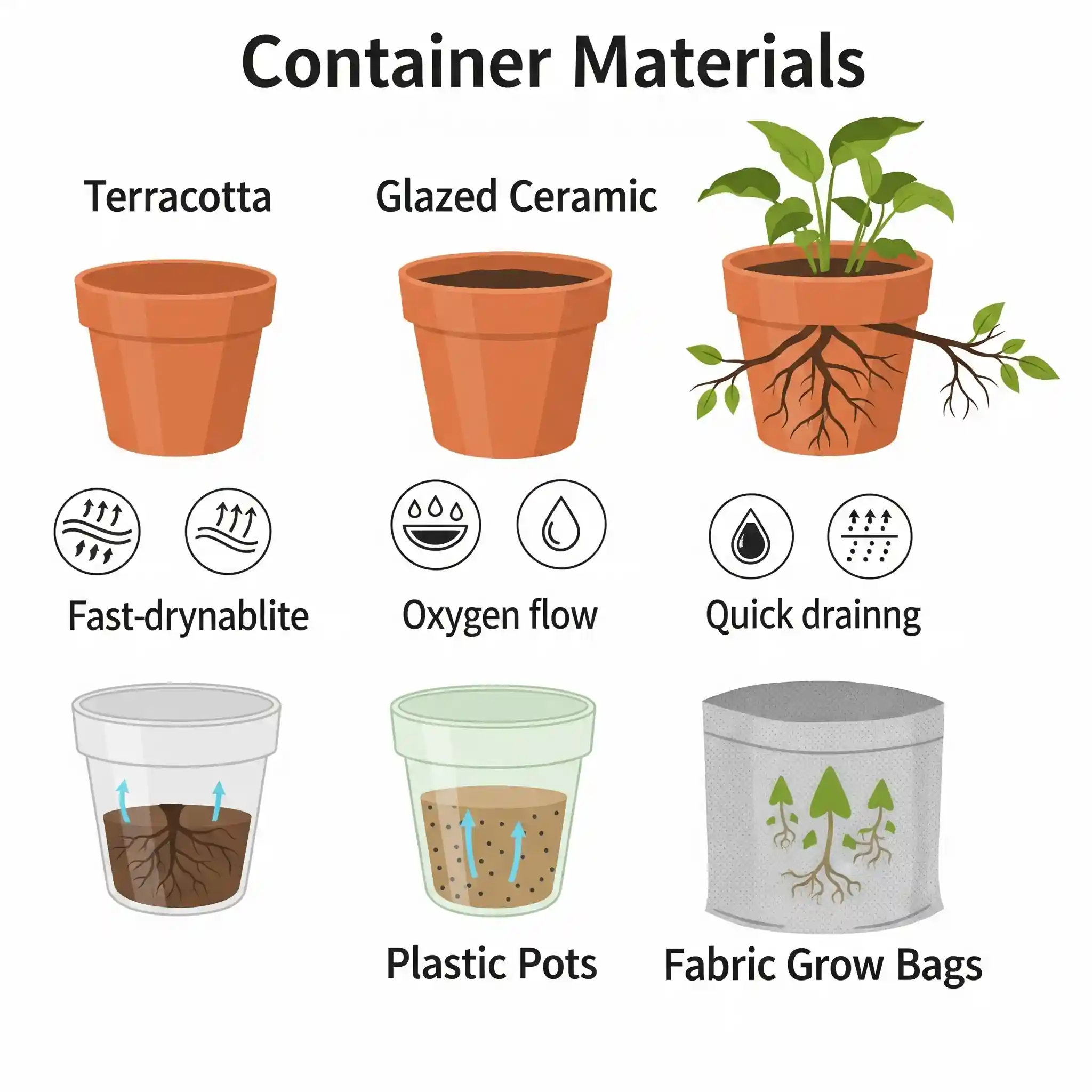
- Terracotta: These traditional clay pots are permeable and “breathe,” which means they let air in and out well and stop the soil from getting too wet. This is great for the health of the roots. But this porosity is a double-edged sword: in the summer, they dry out very quickly and always pull moisture out from the soil. They don’t keep heat in during the cold and can soak up water, freeze, and crack.
- Glazed ceramic and plastic: These are non-porous, which means they hold moisture better and cut down on the amount of time you have to water your plants. The bad thing is that the roots don’t get as much air, thus it’s even more important to have a soil mix that drains efficiently. A dark-colored plastic pot can soak up a lot of heat in direct sunlight, which could cook the delicate roots on a hot afternoon. A thick-walled plastic or resin pot that is a light hue is usually the optimum blend of performance and usefulness.
- Fabric grow bags: These let in a lot of air. When a root hits the edge of the cloth, it gets air and stops growing. This makes the plant grow a denser, more fibrous root system instead of a few long, circling roots. “Air pruning” is what this is called. They are light and make it practically difficult to water too much. The big downside is that they dry up faster than any other sort of container and need to be watered every day in the heat.
- Pots with insulation or self-watering: These are higher-end alternatives that are suitable for a long-term perennial like asparagus. Foam pots with insulation keep roots safe from very hot and very cold weather, which makes the plant less stressed. Self-watering containers include a built-in reservoir that keeps the soil moist from the bottom up. This solves the major problem with container gardening and stops the “boom and bust” cycle of wet and dry that can stress a plant.
From what I’ve seen, I think a thick-walled plastic or resin pot is the best choice for novices. It strikes the ideal balance between being portable, durable, and keeping moisture. Terracotta is a classic, but a rookie grower can find it hard to keep up with the daily watering in the summer, and if you skip just one hot day, your plants could die.
The Perfect Potted Soil: A Recipe for Long-Term Success
A perennial plant that will grow in the same soil for years needs more than just a regular bag of potting mix from a garden center. It needs a medium that is strong, full of nutrients, and drains well so that it can support a crop that eats a lot of food without turning into a dense, airless brick over time. The secret to long-term success is making a bespoke blend.
The Best Recipe for Container Asparagus Soil
This mixture is meant to keep a lot of moisture and nutrients in the soil while still letting water drain well. Instead of merely filling a pot, think of it as developing a whole environment.
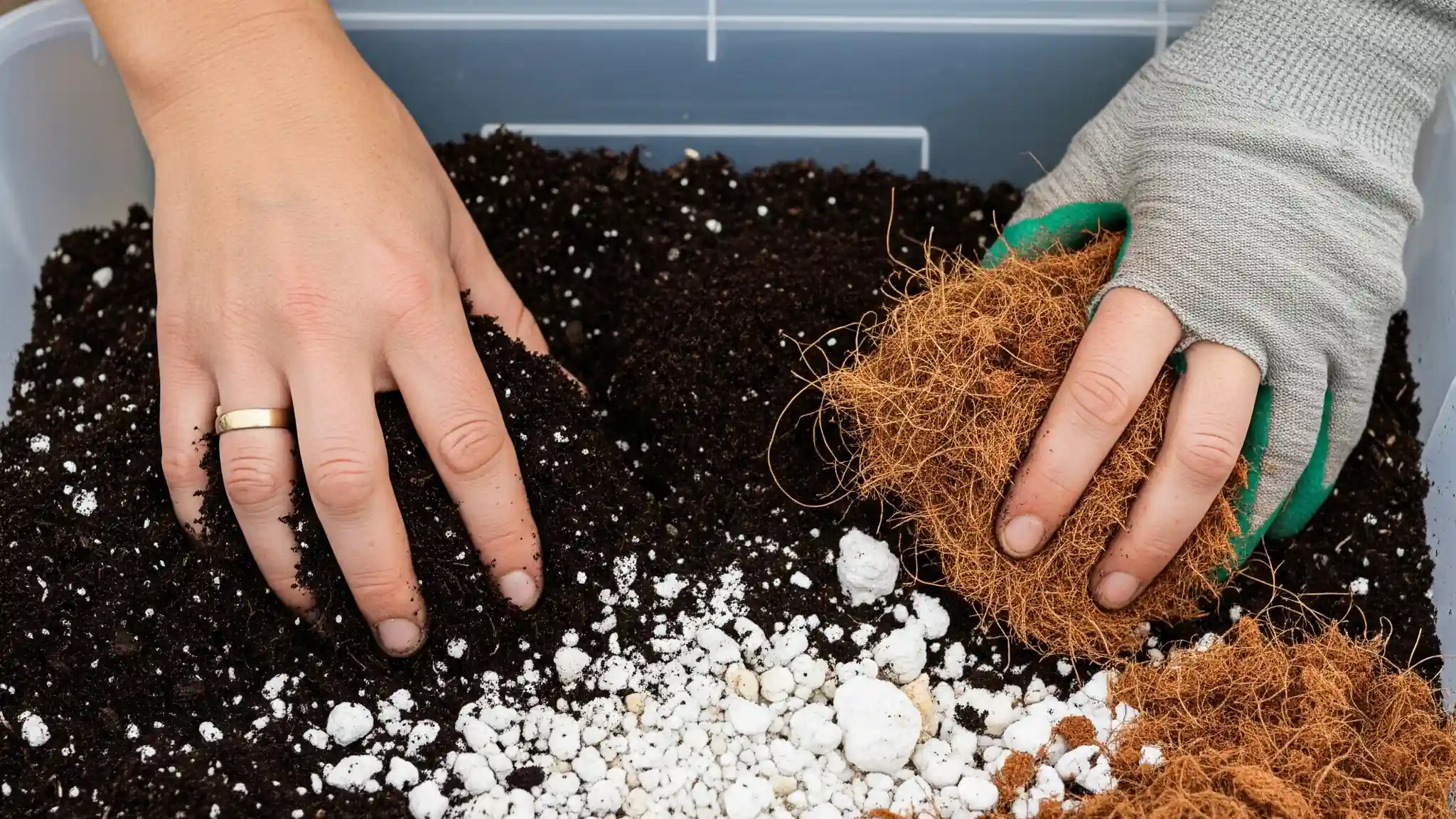
- 50% High-Quality Potting Mix (The Base): This is what holds everything together. Instead of just peat moss, look for a combination that has composted bark fines in it. Bark is better at holding its shape over time and doesn’t compact as easily. This is the structure of your soil.
- 20% High-Quality Compost or Worm Castings (The Nutrition): This is where the magic happens. It gives plants a lot of slow-release organic nutrients and, just as critically, it brings in a wide range of helpful bacteria. These microorganisms assist the plant’s roots get more nutrients and fight off disease-causing germs.
- 20% Perlite (The Drainage): These volcanic glass pebbles are very light and are needed to make and keep air spaces in the soil. This aeration is a must-have in a pot and is the greatest way to keep root rot at bay. It makes sure that your plant’s roots can still breathe even after a lot of rain.
- 10% Peat Moss or Coco Coir (The Moisture Sponge): This part works like a sponge to help the soil hold onto water and protect the plant from drying out too rapidly on hot days. Coco coir is a better choice than peat moss since it is more environmentally friendly and has a pH that is closer to neutral.
- A handful of slow-release granular fertilizer that is balanced: When you plant, mix in a fertilizer with a balanced N-P-K ratio, like 10-10-10. This gives the plants a basic level of nourishment, with a concentrate on phosphorus (the middle number) to help the roots grow strong and the crown expand.
The Guide to Planting Potted Asparagus Step by Step
You need to make the “trench and mound” strategy work for a container in a different way than it does for planting in the ground. Always start with crowns that are 1 or 2 years old, not seeds. This will give you a head start on your crop for many years.
- Prepare the Container: To keep soil from washing out while still letting water out, cover the drainage holes with a piece of window screen or a few coffee filters.
- The First Layer of Soil: Put your personalized soil mix in the container so that it is about one-third full.
- Make the Mound: In the middle of the container, make a cone-shaped mound of earth. The top of the mound should be about 6 inches below the lip of the pot.
- Position the Crown: Put the crown on top of the mound. The asparagus crown looks like a little, hibernating octopus with a body in the middle and roots hanging down. Carefully hang the spindly, fleshy roots down the sides of the mound, spreading them widely like the spokes of a wheel. Make sure the little buds on top of the crown are pointing up.
- The First Backfill: Put 2 to 3 inches of your soil mix over the crown and roots. Don’t fill the whole pot yet. The light can warm the soil through this thin layer, which helps the buds break dormancy faster.
- Water In: Water the soil surrounding the roots well, but not too hard, to get rid of any air pockets.
- Gradual Backfilling (The Pro Technique): This is the most important stage that has been changed to seem like the in-ground trenching approach. As the first spears turn into little ferns, add more of your soil mix to the container slowly over the course of the first season. Add a couple more inches of dirt every few weeks, but always leave the top few inches of the ferns exposed. Keep doing this until the soil is about two inches below the rim of the pot. This makes the crown grow deeper in the pot, where it is safe from temperature changes and has a much more stable basis for future growth.
Expert Tip: The progressive backfilling method is the most important phase for growing container asparagus that many don’t pay enough attention to. A lot of recommendations say to fill the pot all at once, however this can smother the young crown. You are “earthing up” the plant by slowly adding dirt. This will make the crown stronger and deeper and give the plant more spear-producing buds in the future.
A Plan for Managing Your Potted Asparagus for Several Years
A container is a limited system that needs a specific management approach. This is a guide to success year by year.
Year 1: The “Establishment Year”
Follow the classic gardener’s advice for asparagus: “The first year they sleep.” Your main goal is to create a robust root system. Don’t choose any spears. Allow all of them to grow into tall, feathery ferns. Water the plant regularly, finish the progressive backfilling procedure, and watch it grow. The energy factory being developed below ground is what makes the plants grow above ground.
If you are growing this for the first time, start with the complete guide to planting.
Year 2: The First Taste
“They creep” in the second year. You can now have a very small, joyful harvest. Only harvest for a week or two, and only take the thickest 1–2 spears from each plant. Stop harvesting altogether after this short time, and let all the spears that come after this grow into ferns. This is also the year to start a feeding plan. Once the ferns start to grow, give them a balanced liquid fertilizer every two to three weeks to replace the nutrients that are quickly used up in a pot.
Year 3 and 4: The Best Harvest
In the third year, “they leap!” You can now enjoy a full harvest time of 4 to 6 weeks, stopping when the new spears are thinner than a pencil. The plant now needs a lot of food. Keep using the liquid fertilizer during the fern-growing season, and add an inch of fresh compost each spring to the top of the soil to keep the organic matter and microbial life in the soil healthy.
Year 5 and Beyond: The Decision to Repot
Your plant’s roots have probably filled the whole pot by now. You will see indicators that it is “root-bound,” such spear development that is stunted, ferns that are turning yellow, and water that runs right through the container without being absorbed. You have two choices: 1) Repotting: In early spring, carefully slip the whole root ball out of the pot and into a much bigger one (for example, from a 20-inch pot to a 30-inch pot). Fill the new space with fresh bespoke soil. 2) Division: If you’re feeling brave, you can split the crown. In the early spring, take out the thick root ball and cut it into two or three pieces with a sharp shovel or an old serrated bread knife. Make sure that each piece has a lot of roots and a few healthy buds. Start anew by putting each division in its own new pot.
Stop missing your zone's planting windows.
Select your US zone and month — get a complete checklist of what to plant, prune, feed, and protect right now.
→ View My Garden CalendarHow to Fix Problems with Your Potted Asparagus
Growing in a pot comes with its own set of problems. Here’s an easy way to fix them.
| Sign | Possible Cause in a Container | Answer |
|---|---|---|
| Ferns That Are Turning Yellow | Not enough nitrogen. Nitrogen is a nutrient that moves around and comes out of pots quickly when you water them. It’s the most typical problem with pots that have been around for a while. | During the fern-growing season, set up a regular feeding schedule with a balanced liquid fertilizer. A fast boost of nitrogen can be gotten via a dosage of liquid fish emulsion. |
| Thin, Long Spears | Not enough energy. Last year, the crown didn’t have enough food because there wasn’t enough sun, the plants didn’t have enough nutrients, or they were harvested for too long. | Get 6 to 8 hours of sun. During the season when ferns develop, feed them regularly. Don’t harvest for more than the recommended 6 to 8 weeks. |
| Plant Wilting Even Though the Soil Is Wet | Rotting Roots. You may have watered too much, the soil may be too dense, or the drainage may not be good. The roots can’t get any more water since they are choking. | This is hard to solve. To get rid of extra water, tip the pot on its side. Look for blockages in the drainage openings. Use a soil mix with a lot more perlite in the future. |
| A White Crust on the Soil Surface | A lot of salt. Over time, minerals from tap water and chemical fertilizers can build up on the soil surface, which might hurt the plant. | “Flush” the soil once or twice a season by watering it with a lot of clean water and letting it run out the bottom for a few minutes to dissolve and carry away the extra salts. |
The Most Important Problem: Keeping Asparagus Alive in a Pot During the Winter
Container soil freezes significantly faster, harder, and more thoroughly than garden soil. This is why protecting it in the winter is so important. The ground provides geothermal insulation. The ice can get to the sensitive crown from all corners of the container.
Your job is to keep the crown safe from the coldest winds and the biggest changes in temperature. Depending on where you live, here are some good ways to do it:
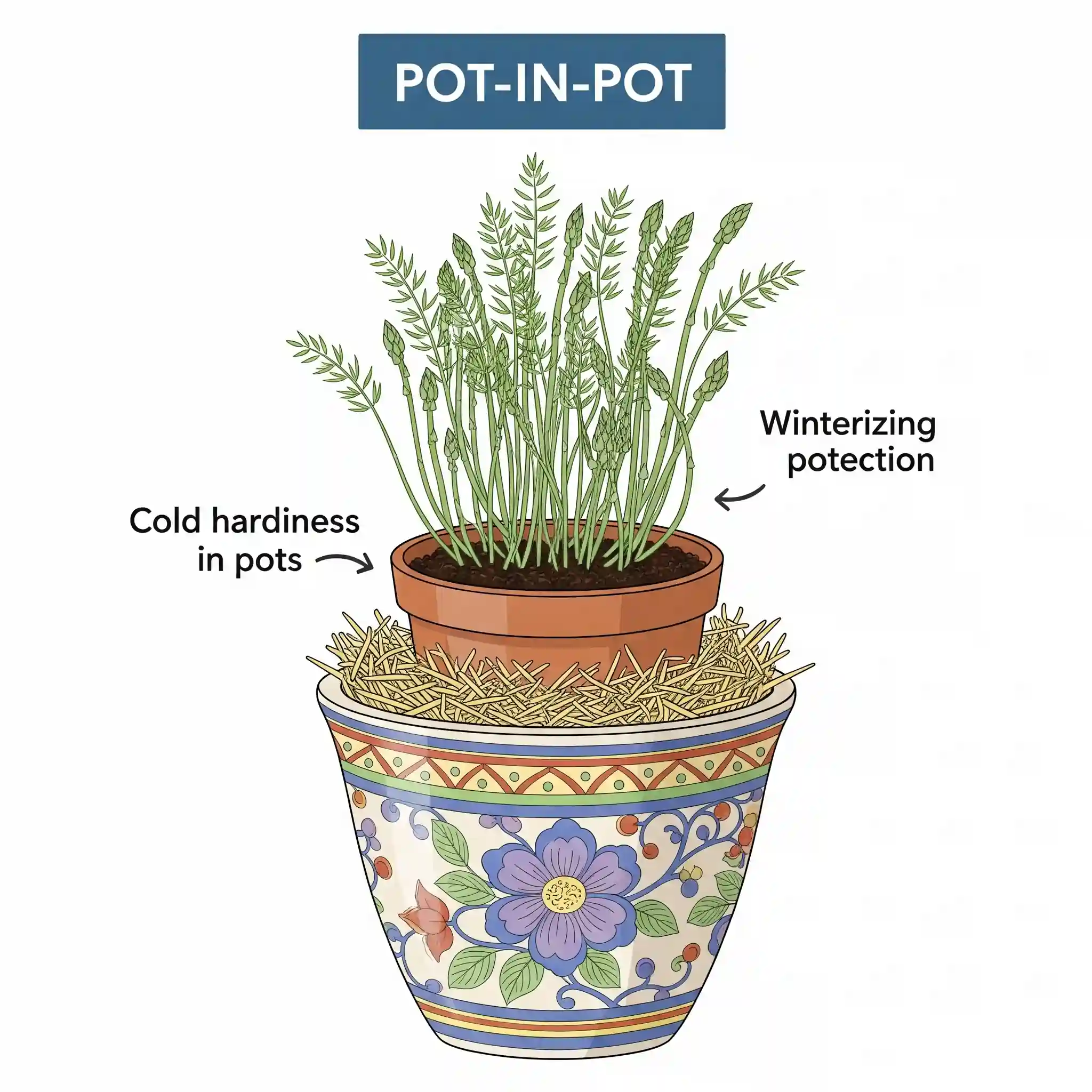
- The “Pot-in-Pot” Method: This is one of the best ways to do it. In the fall, put your asparagus pot inside a bigger decorative pot. Put an insulating material like shredded leaves, straw, or wood chips in the space between the two pots. This makes a buffer zone that protects things and works like the earth’s insulation.
- Burlap Wrapping: To make it easier, wrap the whole pot in many layers of burlap, old blankets, or even bubble wrap. This keeps the root zone from getting too cold, which can be just as bad as the cold itself.
- Move to a Sheltered Location: In colder areas (Zone 6 and below), the best way to keep the pot safe is to relocate it to an unheated garage, shed, or basement after the ferns have died back and been chopped down. The idea is to maintain the crown frozen and dormant, but safe from the extreme cold and repeated freeze-thaw cycles that can hurt it. During this time of dormancy, it doesn’t need light. Check the soil once a month. If it’s absolutely dry, give it a cup or two of water to keep the roots from drying up altogether.
Final Thoughts
Growing asparagus in a pot takes more work than growing it in the ground, but it is very rewarding. The key to success is to really understand its specific needs, such as making a special soil mix for a closed system, taking care of it carefully in the winter, and planning for its long-term future. Any small-space gardener can experience the unique pleasure of picking their own fresh, tasty asparagus, a real gourmet treat from their own patio or balcony, by using these methods.
Questions and Answers
What is the difference between crowns that are one year old and crowns that are two years old? Which one should I buy?
Two-year-old crowns have a bigger, more established root system and will give you a crop that you can harvest one year sooner than one-year-old crowns. But they cost more and might often have greater trouble with transplant shock because their root systems are bigger and more disturbed. For most gardeners, the optimum mix of price, performance, and successful establishment is high-quality, one-year-old crowns from a trusted nursery.
Is it worth it to plant asparagus from seed?
Yes, but you need to be very patient. It will take you 3 to 4 years to get your first harvest, compared to 1 to 2 years from crowns. The biggest benefits are that it costs less and gives you access to rare types. If you’re a patient gardener, this is a great endeavor, but for most people who want a fruitful patch immediately, crowns are the superior choice.
I put my asparagus plants too close together. Is there a way to make it better?
Moving established asparagus is particularly hard because the brittle, fleshy roots can get hurt quite badly. You can try to dig up and move every other crown in early spring, when the plants are still dormant, if they are only in their first or second year. The root systems will be a huge, tangled mat if the patch is older. In this instance, it’s usually better to deal with the reduced yield and thinner spears that come from too many plants in one area, or to start a new patch with the right spacing.
What is the white stuff on the tops of my asparagus?
The white, powdery stuff that is often on bare-root crowns is usually a safe, food-grade clay or diatomaceous earth that the nursery uses to keep the crowns from drying out while they are in storage or on their way to you. It doesn’t mean you have a sickness, and you don’t need to wash it off before planting.
How can I tell whether the crowns I just planted are still alive?
Wait. After planting, it can take 2 to 6 weeks for the first spears to appear, depending on how warm the soil is. If the crowns were strong and healthy when you planted them (not mushy or entirely dry), they are probably still alive and only waiting for the ideal conditions to grow. If nothing has grown after 6 to 8 weeks, you can carefully dig up the dirt over one crown to determine if it has rotted or is still solid.


