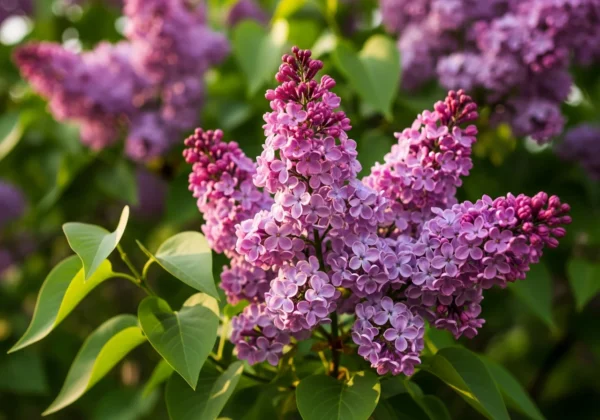
Hyacinth Meaning: The Greek Youth Apollo Loved — and Why a Discus Throw Turned Into a Flower

Discover hyacinth meaning by colour — from Apollo’s grief myth and the AI AI inscription to Persian poetry, Victorian vases, and what each colour means as a gift.
The hyacinth is one of the most immediately joyful sights in a spring garden — dense spikes of violet, pink, or white bloom pushing up through cold soil, filling the air with one of the most distinctive fragrances any bulb produces. It reads, instinctively, as happiness.
Yet the flower’s name comes from a cry of grief. When the god Apollo lost the young man he loved, he transformed the boy’s blood into a flower and inscribed his lament — AI AI, alas, alas — on its petals. The hyacinth has carried that grief, and the rebirth that followed it, ever since.
That tension between tragedy and joy is what makes hyacinth symbolism genuinely unusual. This guide covers what hyacinths mean by colour, culture, and context — starting with the myth that named them. For the broader tradition this sits in, see our flower symbolism guide.
What Does a Hyacinth Symbolise?
The hyacinth’s oldest meanings, preserved in the Victorian language of flowers, are sport and rashness — both trace directly to the discus game that killed the flower’s mythological namesake. They are not the meanings most people reach for today.

Get a free pre-planned flower bed (vase-worthy from June to frost)
Printable planting plans for a cut-flower bed and a cottage pollinator bed — plant list, spacing, and calendar included.

Modern floriography has softened the hyacinth considerably. The dominant meanings now are happiness, playful joy, beauty, and the power of spring rebirth. These suit the flower’s character: it arrives at the end of winter when almost nothing else has broken dormancy, and it does so with both colour and fragrance rather than one or the other.
The underlying meaning that holds across all interpretations is cyclical renewal. A hyacinth bulb spends months underground — dormant, invisible, apparently gone — and returns unchanged the following spring. Across cultures that noticed this pattern, the flower became a symbol of the persistence of life through apparent endings: not a negation of grief, but what follows it.
The core meanings, then: joy, playful sport, spring rebirth, and the continuity of life through loss.
The Greek Myth of Hyacinthus
The hyacinth is one of the few flowers with an origin story precise enough to explain everything about it — the name, the colour, the inscription on its petals, and why a spring bulb carries associations with both sorrow and celebration.

Hyacinthus was a Spartan prince of remarkable beauty. The god Apollo was so taken with him that he left Olympus to live as Hyacinthus’s companion on the plains of Sparta — hunting together, playing music, competing in athletic games. According to Ovid’s Metamorphoses, Book 10, Apollo cast aside his lyre and his quiver to be with the boy — an extraordinary concession from a god defined by those instruments [1].
Hyacinthus attracted other admirers. The West Wind, Zephyrus, also loved him, and when Hyacinthus chose Apollo’s company over his, Zephyrus did not accept the rejection.
One afternoon, Apollo and Hyacinthus were throwing the discus on the plain. Apollo sent the disc high and far — a god’s throw. As it curved back to earth and Hyacinthus ran to catch it, Zephyrus acted: he blew a gust that sent the disc off course, straight into the young man’s face. The blow was fatal.
Apollo caught Hyacinthus as he fell and tried everything in his divine knowledge to close the wound. Nothing worked. As the boy died in his arms, Apollo made the only gift he could: he transformed the blood that had fallen onto the grass into a flower — the hyacinth. On its petals, he inscribed his grief: AI AI — the Greek cry of lamentation, meaning alas, alas [1].
The name hyacinth is, at its root, Apollo’s word of mourning.
The Spartans honoured this story with an annual three-day festival, the Hyacinthia [2]. The first day was given over entirely to mourning for Hyacinthus — no flower crowns, no bread, no hymns of joy. The following two days celebrated his rebirth as a flower, with processions, music, and public feasting. The grief and the celebration were not separated: they were two phases of the same event, in sequence. It is, in structure, almost identical to how we encounter the hyacinth now — a flower associated with sorrow through the myth, and with spring joy through the season.
Some Hyacinthus orientalis cultivars do carry subtle streaking and veining on their petals [3] — markings that, in the right light, resemble letter-forms. Botanists don’t make too much of this, but it has kept the AI AI legend alive in horticultural writing for centuries.
Hyacinth Meaning by Colour
The Victorian language of flowers assigned specific meanings to each hyacinth colour, most of which trace back to the mythology. Here is what each communicates:

| Colour | Meaning |
|---|---|
| Purple | Sorrow, deep regret, asking for forgiveness |
| Blue | Sincerity, constancy, sport — the classical meaning from the myth |
| White | Prayer, loveliness, purity |
| Pink | Playfulness, sport, and joy |
| Yellow | Jealousy |
| Red | Games and rashness |
The yellow hyacinth carries the most specifically freighted meaning in this table. Its symbolism — jealousy — connects directly to Zephyrus, whose envy of Apollo redirected the fatal discus. Giving yellow hyacinths is not a casual spring gesture; it carries a specific charge that most recipients won’t consciously recognise but that is there in the tradition.
In Roman Catholic tradition, Hyacinthus orientalis carries an additional symbolic register: prudence, constancy, desire of heaven, and peace of mind [3]. These meanings align with blue and white varieties, which appear in religious contexts — altar displays, baptism arrangements, and Easter flowers. The purple hyacinth appears specifically during Lent, its colour of penitence matching its floriographic meaning of sorrow and the desire to be forgiven.
Stop missing your zone's planting windows.
Select your US zone and month — get a complete checklist of what to plant, prune, feed, and protect right now.
→ View My Garden CalendarHyacinth Symbolism Across Cultures
Persian poetry: the flower of dark curls and desire
In classical Persian verse — particularly in the ghazals of Hafiz of Shiraz (c. 1315–1390) — the hyacinth occupies a completely different register from its Greek origin. Where Ovid made it a symbol of grief, Hafiz made it a symbol of beauty, desire, and an almost unbearable attractiveness. In Gertrude Bell’s 1897 translations of the Poems from the Divan of Hafiz, the hyacinth appears as a comparison for the beloved’s dark, curling hair: the tight spirals of the flower’s petals echoing the intoxicating locks that trap the lover’s heart [5]. Bell’s phrasing — “stirring the hyacinth’s purple tresses curled” — gives some sense of how the image worked in Persian verse.

This is a significant motif in the tradition: hyacinth hair in classical Persian poetry meant beauty so overwhelming it constituted a kind of captivity. The flower’s scent, which is penetrating and almost narcotic at close range, became inseparable from desire. In Rumi’s imagery as much as Hafiz’s, the hyacinth represents the beloved’s presence as something that overwhelms the lover entirely — fragrant, enveloping, and impossible to resist.
Christian tradition: resurrection from dormancy
The spring-bulb cycle made the hyacinth a natural Easter symbol in Christian tradition. A bulb that spends winter underground and re-emerges in spring maps directly onto resurrection theology [8]. Purple hyacinths appear in Lenten arrangements — the colour of penance and anticipated grief. White and pink varieties fill Easter displays, their emergence marking the liturgical shift from mourning to celebration in a way that mirrors the Hyacinthia festival, two millennia later and half a continent away.
Ottoman mourning gardens
When the Ottoman Sultan Murad III died in 1595, his son had no fewer than half a million hyacinths planted as a gesture of mourning — an act that speaks to how deeply the flower’s dual symbolism (grief and rebirth) had embedded itself in Ottoman court culture [4]. The Netherlands had by then established itself as the primary supplier of hyacinth bulbs to European and Ottoman courts alike, with the Haarlem bulb trade centring heavily on this flower.
What Does a Hyacinth Mean as a Gift?
The hyacinth is one of the more intentional spring flowers you can give, because colour choice carries specific weight. It communicates best when you know which meaning you want to send.

- Purple hyacinth is the most symbolically precise apology gift in the Victorian language of flowers. It conveys sorrow and the genuine desire to be forgiven — not as a generic sorry gesture, but as an acknowledgement of real regret. That specificity makes it the right choice when you want the message to be understood clearly.
- Pink hyacinth suits playful, affectionate relationships — friends, siblings, anyone you want to celebrate without heaviness. Its meanings of sport and joy map to the lighter side of the mythological tradition.
- White hyacinth suits spring birthdays, baptisms, and occasions where quiet elegance matters more than exuberance. Its prayer and purity associations make it a natural choice for religious milestones.
- Blue hyacinth communicates sincerity and constancy — the steady, faithful message suited to long-standing relationships or to marking a commitment.
As a general spring birthday gift, a pot of forced hyacinths is hard to beat: the fragrance fills a room, the timing is right, and it carries meaning across almost every colour. Think of it as a small, portable version of what the Spartans marked every year — the return of life, colour, and scent after the silence of winter.
If you’re building a spring display that combines meanings, the hyacinth pairs naturally with other spring bulbs that carry their own symbolic histories. See our guide to iris meaning — another spring bulb symbol for how that flower’s symbolism developed, and our guide to crocus meaning — spring renewal for the earliest of the spring bulbs.
Hyacinth in History and Art
The hyacinth’s symbolic richness attracted sustained artistic attention across several traditions.

Greek vase painting: Hyacinthus appears in Attic red-figure pottery as one of the few mortals who attracted a major Olympian god’s love — depicted as an athlete, the discus nearby, the god at his side. His story was considered significant enough to be repeated by Pindar, Euripides, and Apollodorus before Ovid gave it the form that reached the Renaissance and beyond [1].
Persian poetry: Hafiz’s Divan represents the most sophisticated artistic treatment of hyacinth symbolism in the literary tradition. Bell’s 1897 translations introduced Persian flower imagery — including the dark-curls metaphor — to English readers with a precision that subsequent translations have rarely matched [5].
Victorian hyacinth vases: From around 1700, European households began forcing hyacinth bulbs in specially designed glass vases — the bulb resting above water in the upper chamber, roots hanging down into the liquid below. Madame de Pompadour reportedly had hundreds filling the rooms at Versailles in the 1750s. By the Victorian era, the squat “Tye” vase — named for Birmingham glassmaker George Pierney Tye — was mass-produced for the growing middle-class market [6]. What had been an aristocratic luxury became a domestic ritual: forcing a hyacinth bulb through winter was one of the few ways an ordinary household could have a cutting-garden flower indoors in February. Antique hyacinth vases are now collected objects in their own right.
Easter displays: Hyacinths feature in European church Easter arrangements with particular frequency in Northern Europe, where their spring timing aligns precisely with Holy Week. The scent of hyacinths in an enclosed church is itself part of the tradition — overwhelming, spring-announcing, unmistakable.
Frequently Asked Questions
What does purple hyacinth mean?
Purple hyacinth means sorrow, deep regret, and the genuine desire to be forgiven. It is the most emotionally specific colour in hyacinth floriography — suited to a sincere apology rather than a general sympathy gesture. The purple colour reinforces the meaning: it is the colour of mourning and penance, which is why purple hyacinths appear in Lenten arrangements in the Christian tradition.
Is hyacinth a symbol of death?
Not exactly — though the association with grief is well-grounded. In Greek mythology, the hyacinth was created from the blood of a dying young man and inscribed with a god’s lament. In ancient Sparta, a full day of mourning preceded the festival’s two days of celebration. The hyacinth is better understood as a symbol of mourning followed by rebirth — grief acknowledged and then transformed. This duality is why the same flower appears in both condolence arrangements and spring celebrations. It belongs to both, in sequence.
Why is hyacinth associated with Apollo and death?
Because the flower is literally named from Apollo’s cry of grief. When Hyacinthus was killed by a discus deflected by the jealous wind god Zephyrus, Apollo transformed the young man’s blood into a hyacinth and inscribed AI AI — alas, alas — on its petals [1]. The flower is Apollo’s permanent act of remembrance: a monument to loss that renews itself every spring, which is precisely why it became a symbol of both grief and rebirth rather than either alone.
Sources
- Ovid, Metamorphoses, Book 10, lines 162–219. A.S. Kline translation, Perseus Digital Library. The primary classical source for the Hyacinthus myth and the AI AI inscription.
- Theoi Classical Texts Library, Hyakinthos — Spartan prince of Greek mythology. Full overview of ancient source references including the Hyacinthia festival.
- RHS, Hyacinthus orientalis. Botanical details, cultivation requirements, and cultural notes.
- Old House Gardens, “Hyacinth History”. Historical account of hyacinth cultivation, Dutch trade, and Ottoman mourning plantings.
- Gertrude Bell, Poems from the Divan of Hafiz (1897, William Heinemann). The standard English translation of Hafiz; source of the hyacinth-as-dark-curls imagery in Persian verse.
- Hyacinth Vases — history of forcing vases. History of the hyacinth vase from c. 1700, including the Tye vase and Madame de Pompadour connection.
- Florgeous, “Hyacinth Flower Meaning”. Colour-by-colour floriographic meanings.
- Damblys Garden Center, “Hyacinths, a Symbol of Life Death and Rebirth”. Christian resurrection symbolism and Easter tradition.