

How Does Wood Ash Affect Hydrangea Health?

Wood ash raises the pH level of the soil, making it more alkaline, which can alter the color of hydrangea blooms from blue to pink or red. It provides essential nutrients like calcium, potassium, and magnesium, promoting healthier growth. However, excessive use can lead to nutrient imbalance and should be applied sparingly — no more than 1 cup (approximately 100 g) per square foot, once per season — to avoid harming the plant. Understanding exactly how wood ash interacts with your soil chemistry is the key to using it successfully.
Quick answer: Yes, wood ash can benefit hydrangeas — but only in controlled amounts on the right soil type. It raises pH, which pushes mophead colours toward pink and red. On already alkaline soil, it does more harm than good.
Why Hydrangeas Respond So Strongly to Soil Amendments
Hydrangeas are among the most soil-sensitive ornamental shrubs you can grow. Unlike most garden plants that simply need adequate nutrition to thrive, hydrangeas wear their soil chemistry on their sleeves — quite literally, through the colour of their flowers. This remarkable trait makes them uniquely responsive to amendments like wood ash, but it also means that careless application can produce unwanted results.
The mechanism behind this sensitivity lies in aluminium availability. In acidic soils (pH below 5.5), aluminium ions dissolve freely and are absorbed by hydrangea roots, producing the pigments responsible for blue and violet blooms. As pH rises toward neutral and beyond, aluminium becomes locked in the soil and unavailable to the plant, causing flowers to shift toward pink, mauve, and eventually red. Wood ash, with its strongly alkaline character, can trigger exactly this kind of shift.

Get a free pre-planned flower bed (vase-worthy from June to frost)
Printable planting plans for a cut-flower bed and a cottage pollinator bed — plant list, spacing, and calendar included.
What Hydrangeas Need to Thrive
Soil Structure and Drainage
Hydrangeas perform best in moist, well-drained soil that is rich in organic matter. They need consistent moisture — their large leaf surfaces lose water quickly on warm days — but they absolutely cannot sit in waterlogged ground. Heavy clay soils should be amended with compost or well-rotted bark to improve drainage, while sandy soils benefit from added organic matter to boost water retention.
A layer of organic mulch around the root zone (5–8 cm deep, kept away from the stem) is one of the simplest and most effective things you can do. It moderates soil temperature, conserves moisture, and gradually feeds the soil as it breaks down.
Light Requirements
Most hydrangea species prefer bright, filtered light or morning sun with afternoon shade. Direct midday sunlight, particularly in warmer climates, scorches leaves and causes flowers to fade prematurely. Panicle hydrangeas (Hydrangea paniculata) are the exception — they tolerate and even benefit from full sun in cooler regions.
The Role of Soil pH in Bloom Colour
The most fascinating aspect of hydrangea care is the direct link between soil pH and flower colour. This applies primarily to Hydrangea macrophylla (bigleaf hydrangea) and Hydrangea serrata varieties. Here is the general relationship:
| Soil pH Range | Aluminium Availability | Typical Bloom Colour |
|---|---|---|
| Below 5.5 | High | Deep blue to violet |
| 5.5 – 6.0 | Moderate | Purple to lavender |
| 6.0 – 6.5 | Low | Mauve to soft pink |
| Above 6.5 | Very low | Pink to red |
White-flowered hydrangeas (such as Hydrangea arborescens ‘Annabelle’) are not affected by soil pH — they stay white regardless of conditions. Keep this in mind before applying any soil amendment with the intention of changing flower colour.
Understanding Wood Ash: Composition and Properties
What Is Wood Ash?
Wood ash is the powdery mineral residue left after wood combusts. As the fire burns away water, cellulose, and volatile organic compounds, what remains is a concentrated collection of the minerals the tree absorbed from the soil during its lifetime. This is why wood ash has been valued as a soil amendment for thousands of years — it returns nutrients to the earth in a readily available form.
Nutrient Breakdown
The exact composition varies by wood species and burn temperature, but typical wood ash contains:
| Nutrient | Typical Content | Role in Plant Growth |
|---|---|---|
| Calcium carbonate (CaCO₃) | 20–45% | Cell wall structure, root development, pH buffering |
| Potassium (K₂O) | 3–10% | Flower and fruit development, disease resistance, water regulation |
| Magnesium (MgO) | 1–4% | Chlorophyll production, enzyme activation |
| Phosphorus (P₂O₅) | 0.5–2% | Root growth, energy transfer, flowering |
| Trace minerals | Variable | Iron, manganese, zinc, boron — essential micronutrients |
Hardwood ash (oak, beech, ash, maple) is generally richer in nutrients and higher in pH-raising capacity than softwood ash (pine, spruce, fir). If you are using wood ash in the garden, hardwood is the better choice — though any clean, untreated wood ash can be beneficial in moderation.
The Liming Effect
Wood ash has a pH value typically between 9 and 13, making it strongly alkaline. Its calcium carbonate content gives it a liming value roughly equal to 40–50% that of commercial agricultural lime. In practical terms, this means that a generous handful of wood ash scattered around a plant can measurably raise the soil pH within weeks — faster than ground limestone, which takes months to react fully.
This rapid action is both the advantage and the danger of wood ash. It works quickly, but it can overshoot your target pH if you are not careful with quantities.
How Wood Ash Affects Hydrangeas: The Complete Picture
Shifting Bloom Colour from Blue to Pink
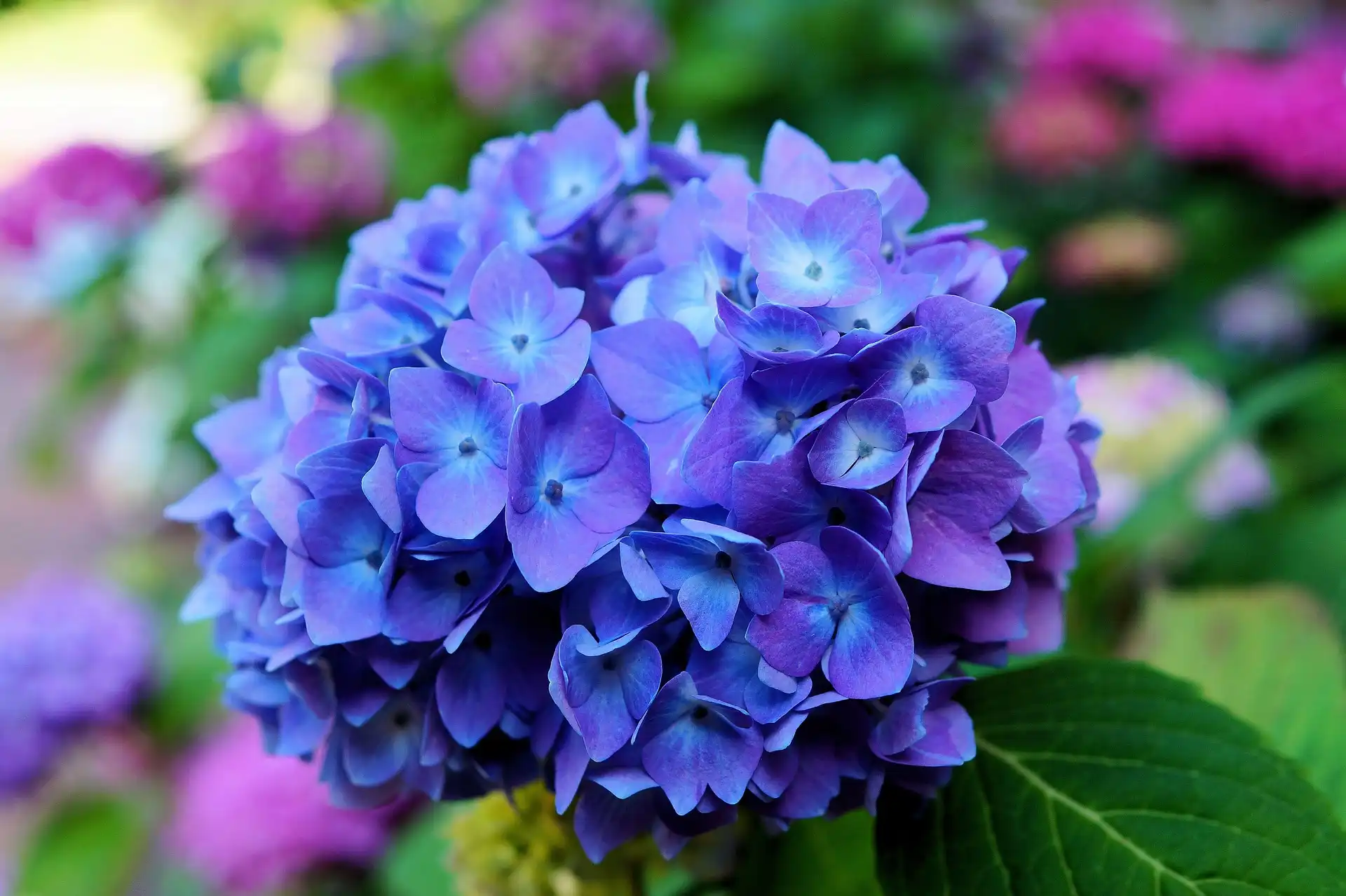
The most visible effect of applying wood ash around hydrangeas is a gradual colour change. Here is the precise mechanism: aluminium ions in the soil are directly responsible for the blue pigment in Hydrangea macrophylla. When soil pH is below 6.0, aluminium dissolves freely and is absorbed by the roots, producing blue flowers. Wood ash raises pH — and once pH climbs above 7.0, aluminium becomes chemically locked in the soil matrix and unavailable to the plant. With less aluminium reaching the blooms, flowers shift from blue toward pink and red. If your hydrangeas currently produce blue flowers (indicating acidic soil with available aluminium), adding wood ash will raise the soil pH and gradually lock away that aluminium. Over one to two growing seasons, you will see blooms transition through purple and lavender toward pink.
This can be a deliberate strategy if you want pink or red hydrangeas. Many gardeners who inherit a garden with blue hydrangeas but prefer warmer tones use wood ash as a gentle, natural way to shift colours without resorting to synthetic lime products. The transition is usually gradual enough that you can monitor progress and stop once you achieve the shade you want.
Providing Essential Nutrients
Beyond pH effects, wood ash delivers genuinely useful nutrition. The potassium content supports robust flower production and helps hydrangeas develop stronger stems that can hold up heavy flower heads without flopping. Calcium contributes to strong cell walls and healthy root systems. Magnesium supports chlorophyll production, keeping foliage a deep, healthy green.
For hydrangeas that are growing in nutrient-poor or sandy soils, a light application of wood ash can provide a meaningful nutritional boost. It is not a complete fertiliser — it lacks nitrogen, which hydrangeas need for leaf growth — but it complements nitrogen-rich amendments like compost or well-rotted manure nicely.
Stop guessing your soil pH.
Enter your soil type and test reading — get exact lime or sulfur rates for your plants in seconds.
→ Calculate Soil NeedsImproving Soil Structure
Wood ash can also improve heavy clay soils by helping to flocculate (clump together) fine clay particles, creating better soil structure and improved drainage. Since hydrangeas need good drainage but consistent moisture, this structural improvement can be a hidden benefit, particularly in gardens with dense, compacted soil.
How to Apply Wood Ash Around Hydrangeas
Step-by-Step Application
Getting the application right is crucial. Too little and you will not see any benefit; too much and you risk damaging your plants. Follow this process:
1. Test your soil pH first. Use a home testing kit or send a sample to a laboratory. If your soil is already at pH 6.5 or above, do not add wood ash — it is already alkaline enough for hydrangeas and adding more will cause problems.
2. Choose clean ash. Only use ash from untreated, unpainted, natural wood. Ash from charcoal briquettes, treated timber, plywood, or any material with adhesives, paints, or preservatives may contain heavy metals and toxic compounds that are harmful to plants and soil life.
3. Measure carefully. Apply no more than 1 cup (approximately 100 g) of wood ash per square foot of soil around the hydrangea’s drip line. The drip line is the area on the ground directly below the outermost reach of the branches — this is where the feeder roots are concentrated. Never apply dry ash to dry soil: the concentrated alkalinity sits on the surface and risks direct contact burn to roots and foliage. Always water the ground lightly before scattering ash, or water in immediately after.
4. Scatter evenly. Sprinkle the ash in a thin, even layer. Avoid dumping it in concentrated piles, which creates localised hotspots of extreme alkalinity that can burn roots.
5. Keep ash off the plant. Do not let ash contact stems, leaves, or flower buds. The caustic alkalinity can damage plant tissue directly.
6. Work it into the topsoil. Use a hand fork or rake to gently incorporate the ash into the top 3–5 cm of soil. This prevents the ash from blowing away and helps it integrate with the soil moisture more quickly.
7. Water lightly. A gentle watering after application helps dissolve the ash minerals and begin the soil reaction. Avoid heavy watering that could wash the ash into concentrated pools.
When to Apply
The best time to apply wood ash is in late winter or early spring, before the growing season begins. This gives the minerals time to dissolve and integrate into the soil before the hydrangea starts its active growth phase. Autumn application is acceptable too, as winter rains will work the ash into the soil naturally.
Avoid applying wood ash in summer when hydrangeas are actively flowering. A sudden pH shift during bloom can stress the plant and cause premature flower drop.
How Often to Apply
Limit application to once per year. Wood ash effects accumulate over time, and annual soil testing will tell you whether your pH is moving in the direction you want. If you are trying to raise pH from 5.0 to 6.5, expect the process to take two to three years of careful, measured applications rather than one heavy dose.
Monitoring Your Hydrangeas After Applying Wood Ash
After applying wood ash, observation becomes your most important tool. Here is what to watch for in the weeks and months that follow.
Positive Signs
Healthy new growth: Vigorous spring shoots with deep green leaves indicate that the nutrients are being absorbed well. Gradual colour shift: If you wanted to move from blue toward pink, you should see intermediate shades (purple, lavender) appearing in the next flowering season. Stronger stems: Potassium from the ash helps produce sturdier stems that support heavy flower heads better.
Warning Signs
Yellowing leaves with green veins (interveinal chlorosis): This is a classic sign of iron deficiency, often caused by soil pH that has risen too high. When pH exceeds 6.5–7.0, iron becomes unavailable to the plant even if it is present in the soil. Stop adding ash immediately and consider applying iron chelate as a short-term fix.
Stunted growth or wilting: Can indicate calcium toxicity or a severe pH imbalance. Test your soil pH — if it has risen above 7.0, you will need to add sulphur or acidifying mulch (pine needle mulch, composted oak leaves) to bring it back down.
Leaf edge browning: May indicate salt burn from over-application. Wood ash contains soluble salts that, in excess, draw moisture out of root cells.
When to Avoid Using Wood Ash on Hydrangeas
There are several situations where wood ash will do more harm than good. Recognising these scenarios is essential for responsible gardening.
Your Soil Is Already Alkaline
If a soil test shows pH above 6.5, adding wood ash is counterproductive. Hydrangeas grow best in the pH range of 5.5 to 6.5. Pushing beyond this range locks out essential trace minerals and can cause a cascade of nutrient deficiency symptoms. Gardeners in chalk or limestone regions typically have naturally alkaline soils and should avoid wood ash entirely for acid-loving plants.
You Want to Keep Blue Blooms
If you love the blue colour of your hydrangeas, wood ash is the last thing you want near them. To maintain blue blooms, you need to keep the soil acidic (pH 5.0–5.5) with plenty of available aluminium. Instead of wood ash, consider applying aluminium sulphate, sulphur, or acidifying mulches like pine needles. For more on maintaining acidic soil, see our guide on how to acidify the soil for hydrangeas.
You Have Recently Limed the Soil
If you have applied garden lime within the past 12 months, adding wood ash on top creates a double dose of alkalinity. Wait until you can test the soil and confirm the current pH before adding any more alkaline amendments.
The Ash Contains Contaminants
Never use ash from treated or painted wood, composite materials, glossy printed paper, or charcoal briquettes that contain starter chemicals. These can introduce heavy metals (lead, chromium, arsenic) and organic pollutants into your garden soil, contaminating both plants and groundwater.
Wood Ash Compared to Other Soil Amendments
Understanding how wood ash compares to alternatives helps you choose the right amendment for your specific situation.
| Amendment | Effect on pH | Speed of Action | Additional Nutrients | Best For |
|---|---|---|---|---|
| Wood ash | Raises pH (alkaline) | Fast (weeks) | K, Ca, Mg, P, trace minerals | Acidic soils needing quick pH lift + nutrients |
| Garden lime (calcium carbonate) | Raises pH (alkaline) | Slow (months) | Calcium only | Precise, long-term pH correction |
| Dolomite lime | Raises pH (alkaline) | Slow (months) | Calcium + magnesium | Soils low in magnesium |
| Sulphur | Lowers pH (acidic) | Slow (months) | None | Reducing pH for blue blooms |
| Aluminium sulphate | Lowers pH (acidic) | Fast (weeks) | Aluminium | Quick blue colour boost |
| Pine needle mulch | Slightly lowers pH | Very slow (years) | Minimal | Gentle, long-term acidification |
Wood ash stands out for its combination of rapid pH adjustment and multi-nutrient delivery. However, its unpredictability — the exact composition varies with every fire — makes it less precise than purpose-made products. If you need exact pH control, garden lime with a known calcium carbonate equivalent is the safer choice. Wood ash is best treated as a beneficial bonus from your fireplace or wood burner rather than a precision soil tool.
Storing Wood Ash for Garden Use
If you accumulate wood ash over winter and want to save it for spring application, proper storage matters. Keep ash in a dry, covered metal container with a lid. Moisture causes the soluble potassium and calcium compounds to leach out, reducing the ash’s nutritional value. Wet ash also becomes caustic and difficult to spread evenly.
Allow ash to cool completely before storing — even ash that looks cold can harbour embers for days. Store the container away from wooden structures and flammable materials as a fire safety precaution.
Summary and Best Practices
Wood ash is a versatile, natural soil amendment that can benefit hydrangeas when used thoughtfully. Here are the key takeaways:
Always test your soil pH before applying. If it is already at 6.5 or above, skip the wood ash. Hydrangeas thrive between pH 5.5 and 6.5, and going higher creates nutrient lockout problems.
Apply sparingly. 1 cup (approximately 100 g) per square foot, once per season — autumn is ideal, as winter rains help integrate it before spring growth begins. Work it gently into the top few centimetres of soil and water in well. Never apply dry ash to dry soil.
Use only clean ash. Untreated hardwood produces the best ash. Never use ash from treated timber, painted wood, or charcoal briquettes with chemical additives.
Monitor your plants. Watch for signs of over-application — yellowing leaves, stunted growth, or unexpected colour changes. Test soil pH annually and adjust your approach based on results.
Know your colour goals. Want pink or red hydrangeas? Wood ash can help you get there gradually. Want to keep blue blooms? Keep wood ash well away from those plants.
Be patient. Soil chemistry changes gradually. A measured, annual approach over two to three years will give you far better results than a single heavy application.
Used wisely, wood ash closes the loop between your fireplace and your garden, turning waste into nourishment. It is one of the oldest soil amendments known to gardeners, and with a little care and attention, it can help your hydrangeas produce their most spectacular display yet.

Sources
Risse, L.M. Best Management Practices for Wood Ash as Agricultural Soil Amendment. University of Georgia Cooperative Extension Bulletin 1014.
Dirr, M.A. Hydrangeas for American Gardens. Timber Press, 2004.
Nardozzi, C. Using Wood Ash in the Garden. University of Vermont Extension.


